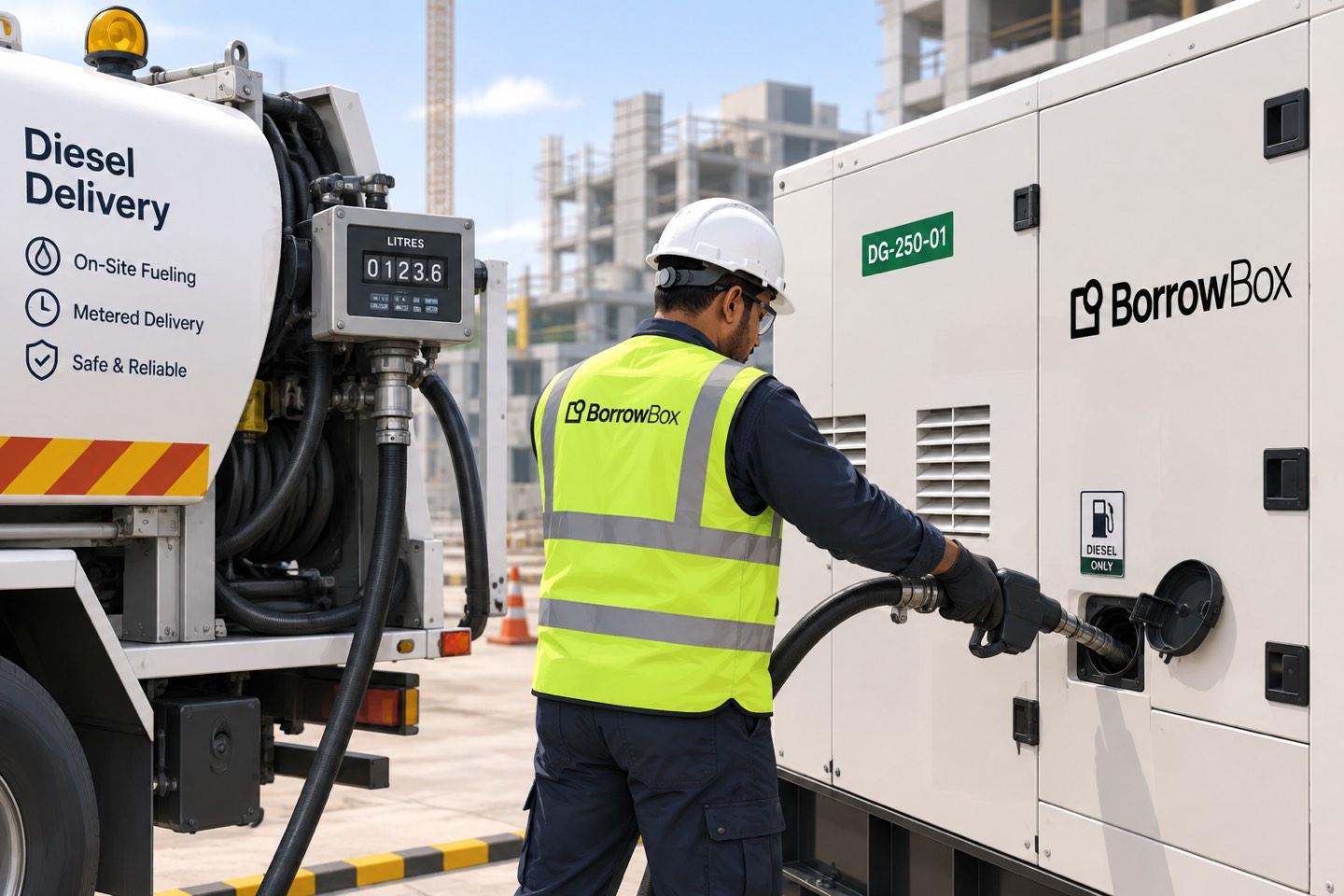
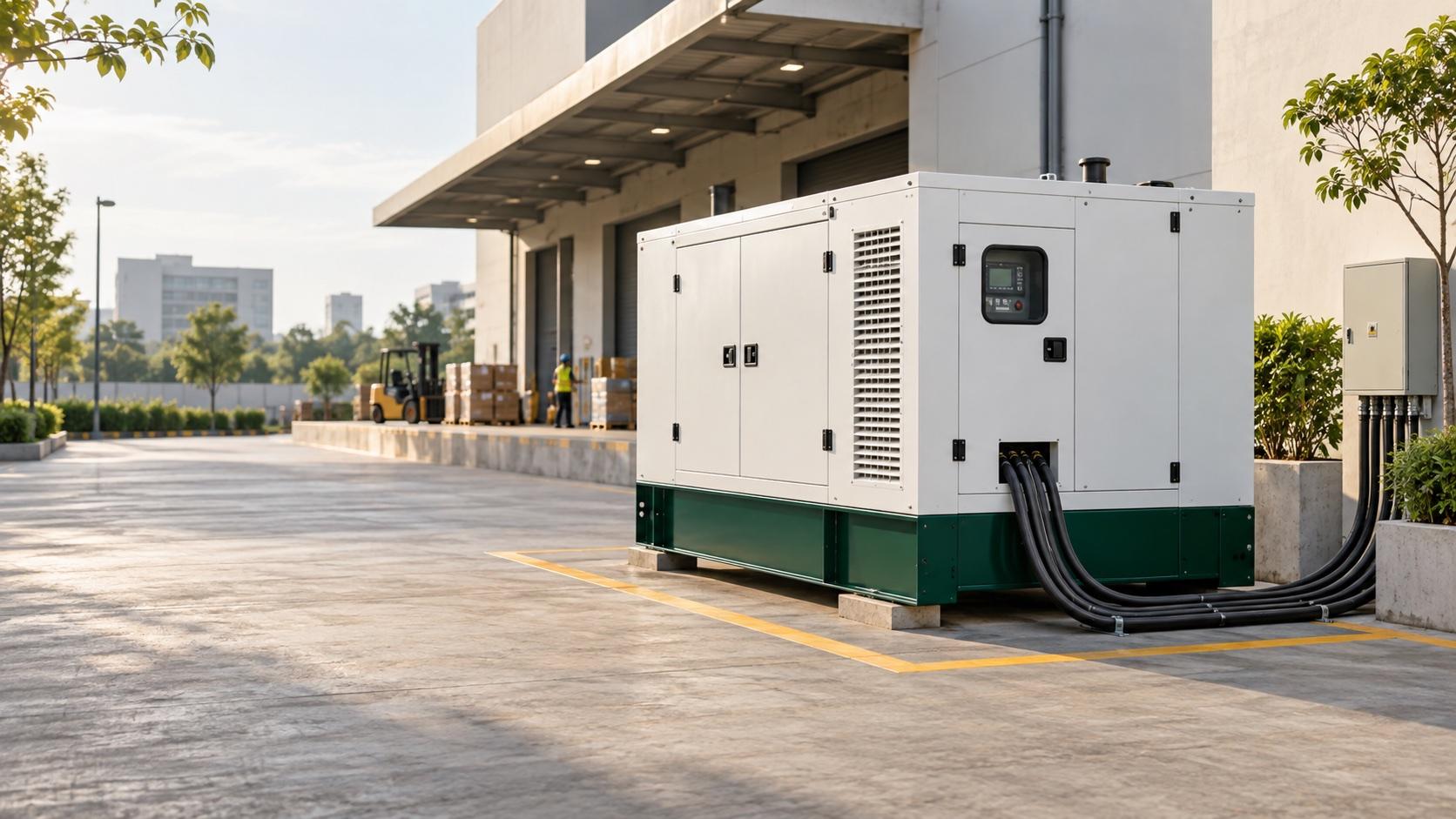
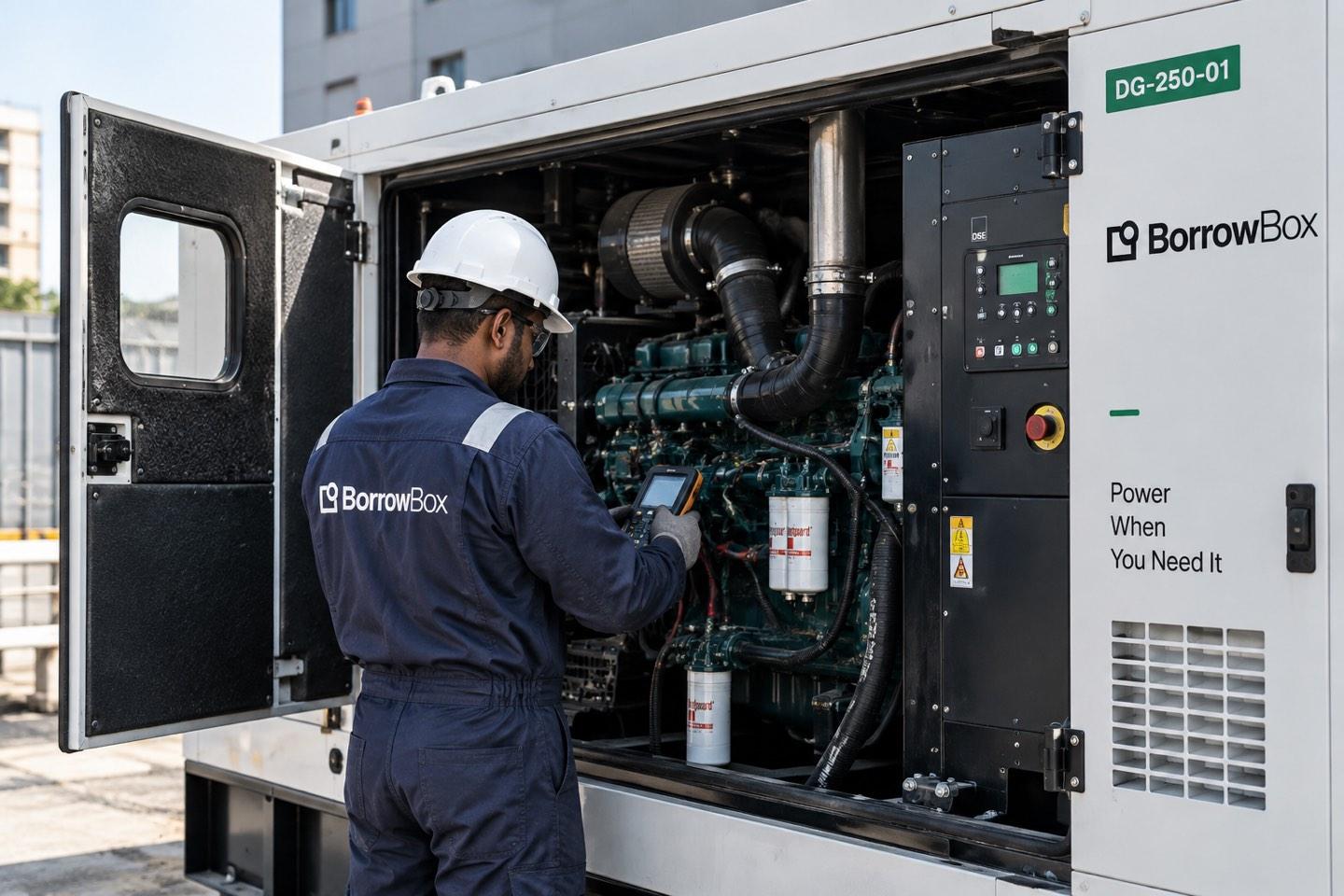
Fuel delivery
Diesel Fuel Delivery Guide for Commercial Sites
Plan diesel fuel delivery for a business site: compare quotes, prepare access, check the delivery record, and confirm safety responsibilities.
By BorrowBox ·
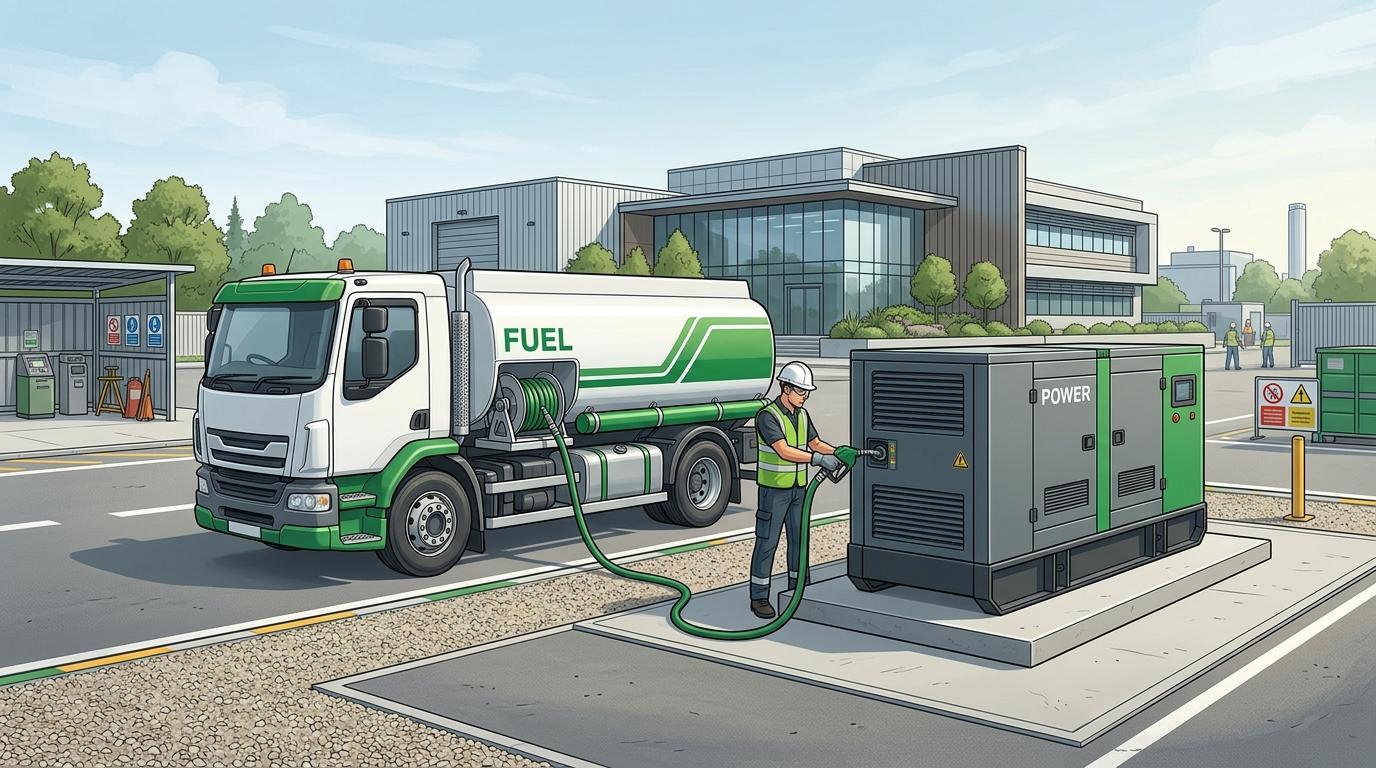
Diesel fuel delivery brings fuel to a business site instead of requiring the site team to arrange collection. For generator operators, the useful question is whether a supplier can deliver the right quantity to the right tank at the time your site needs it. Confirm the delivery area, access, metering, paperwork and safety responsibilities before booking. This guide helps you compare proposals and prepare for a delivery without assuming that every provider offers the same service.
Start with the site address, the equipment being fueled, your estimated quantity and the date by which you need the delivery. Tell the provider whether the fuel will go into a generator tank or an approved storage arrangement. The provider should confirm what it can supply at that location, the order terms and who will supervise the transfer.
What a diesel fuel delivery quote should include
A quoted fuel price alone does not describe the whole job. Ask for the fuel grade, the basis for the delivered price, any delivery or minimum order charge, the quantity measurement method and the documents you will receive. Check the payment terms and what happens if your access window changes. Delivery times and minimum quantities vary by provider, location and availability, so request a written commitment for your specific site.
- Confirm the exact delivery address, contact person and permitted vehicle access times.
- Provide the tank location, estimated order quantity and any hose or distance constraints.
- Ask whether the quoted price includes delivery, taxes and any site service charge.
- Confirm the delivery record, meter reading or other quantity evidence you will receive.
- Agree who is responsible for site access, transfer supervision and spill response.
Plan quantity and timing from actual generator use
Estimate demand from the generator manufacturer or supplier information at your expected load, then combine that with planned running hours. A backup generator may use little fuel in a quiet week and much more during a prolonged outage. Do not rely on a generic liters per hour figure for every machine. Ask the equipment supplier for a consumption range that matches your load and keep a sensible reserve based on your site risk and storage limits.
A simple planning method is expected daily use multiplied by the days until the next confirmed delivery, plus the reserve chosen by your operations team. Compare that estimate with the usable capacity of the receiving tank. Recheck it when running hours or load change. This calculation is a planning aid; the supplier should confirm the order it can deliver and your site team should confirm that there is safe capacity to receive it.
| Information | Why it matters | What to confirm |
|---|---|---|
| Site and tank location | Determines route and transfer setup | Vehicle access, parking and hose route |
| Equipment and expected use | Helps estimate fuel need | Generator model, load and running hours |
| Receiving capacity | Avoids ordering more than the site can accept | Usable tank space before dispatch |
| Delivery window | Coordinates site staff and supplier | Arrival commitment and site contact |
| Quantity record | Supports invoice checks | Meter or delivery note details |
Prepare the delivery route and receiving team
Show the provider the gate, vehicle route, parking area and tank location before dispatch. Photographs or a short site plan can help identify narrow entrances, overhead obstructions, difficult ground or a long hose route. Ask the provider which vehicle and transfer equipment it proposes to use. Have a site contact available to receive the vehicle and confirm the ordered quantity.
Fuel transfer should follow the site safety procedure and the provider’s approved operating method. Keep unrelated work away from the transfer area and make sure the people responsible for access, emergency response and the receiving tank know the delivery is due. Your site safety lead and the provider should agree the specific controls; a blog checklist cannot replace their assessment.
Check the supplier and delivery record
Ask the supplier how its delivery operation is authorized for your location and receiving arrangement. Also ask how it verifies the quantity dispensed, what document accompanies the delivery, and whom to contact if the quantity or fuel quality is disputed. Avoid treating a provider’s general marketing claim as proof that every site or transfer method is covered.
At receipt, compare the order, delivery note and quantity record. If the site has a concern about fuel quality, follow its sampling and escalation procedure with qualified personnel rather than judging quality by color alone. Keep the delivery record with generator running and fuel use records so later invoices and replenishment decisions can be checked.
India’s Petroleum and Explosives Safety Organisation publishes guidance on approvals and licences under the Petroleum Rules. Ask your provider which current requirements apply to the proposed delivery and site. Read PESO approval guidance
Frequently asked questions about diesel fuel delivery
How quickly can diesel reach my site?
There is no reliable universal delivery time. Ask suppliers for an arrival commitment based on your location, order size, access window and current availability. For critical backup power, plan a reserve and a contingency before the tank is nearly empty.
Is there a minimum order quantity?
Minimum quantities and delivery charges vary by provider and route. Give the supplier your needed quantity and receiving capacity, then ask for its minimum and total delivered price in writing.
How can I check the delivered quantity?
Ask what meter reading, delivery note or other quantity record the supplier provides. Compare that record with the agreed order and have the receiving contact note any discrepancy before signing the receipt.
Can the supplier fuel a generator directly?
It depends on the equipment, site arrangement and the supplier’s approved method. Describe the tank and access point before booking, and let the provider and site safety lead confirm whether direct transfer is appropriate.
What should the site team prepare?
Prepare the vehicle route, a receiving contact, tank information and the site procedure for fuel transfer. Confirm any access restrictions and make sure the provider knows where it may park and work.
What if I am concerned about fuel quality?
Pause acceptance and follow your site’s documented sampling and escalation procedure. Ask the supplier for the product and delivery records; visual appearance alone is not a complete quality test.
A useful diesel fuel delivery plan starts with your actual generator use and ends with a clear delivery record. Compare the full service, not just the quoted fuel price, and confirm each responsibility before the vehicle arrives.
Share your site, generator and expected fuel demand to discuss a delivery plan suited to your operations. Explore BorrowBox fuel delivery