Generator maintenance
Emergency Generator Repair: Build a Clear Handover
Prepare an emergency generator repair handover with the asset identity, observed symptoms, site contact and actions already recorded.
By BorrowBox ·
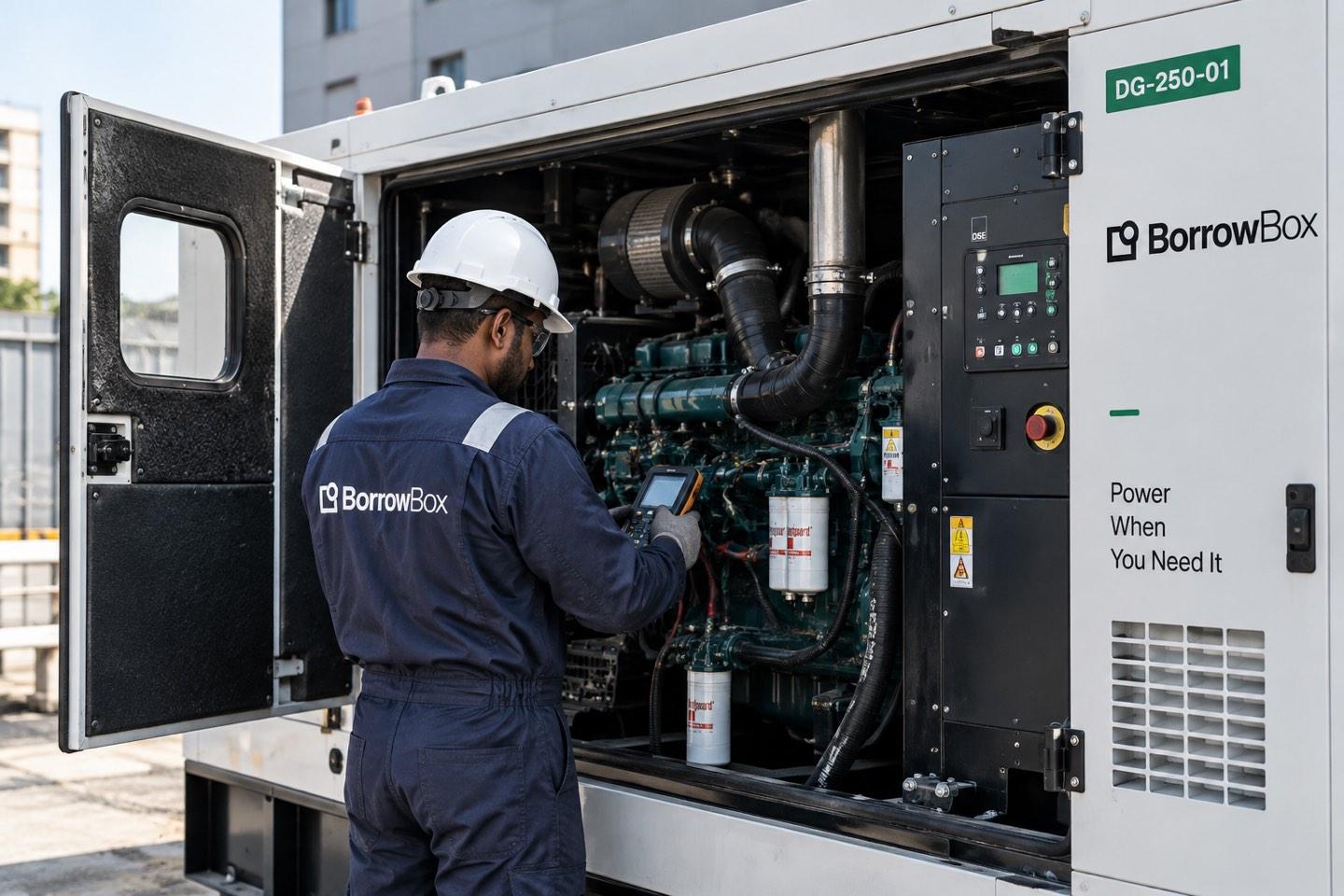
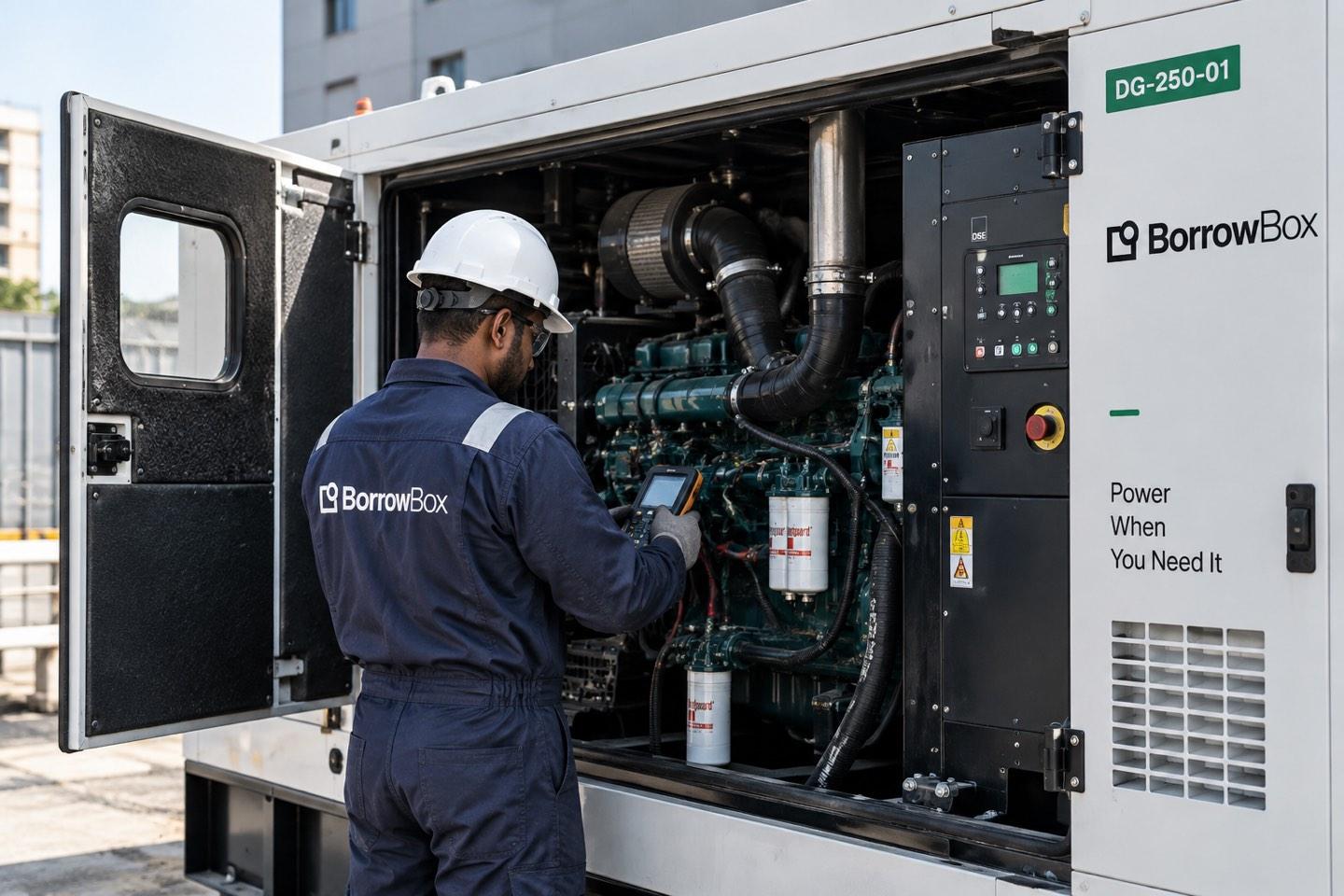
Emergency generator repair starts with the site's incident process and a clear handover to the appropriate service team. Follow the established site instructions and contact the responsible technical personnel. This guide focuses on the information a facility manager can prepare for that conversation. It is not a procedure for opening equipment, resetting faults or attempting repairs during an outage.
Give emergency generator repair a clear incident record
Identify the generator, its location and the person managing the incident. Use the asset reference and available model information rather than a description such as the large generator near the gate. If the machine is rented, include the relevant rental or support reference so that the contact can locate the agreement.
Record what the site observed and when it was observed. Distinguish a failure to start, an interruption during operation and an equipment message reported by someone else. These are different pieces of information. Keep the original account visible rather than replacing it with a diagnosis based on a quick search.
Share observations without testing a theory
Give the service contact the available controller message or fault reference exactly as recorded. Explain the operating activity before the incident and identify any known recent changes. If a reading or photograph cannot be obtained within the site's authorised process, say that it is unavailable.
Do not turn an information request into an attempt to reproduce the failure. Opening panels, altering controls, bypassing protection or repeatedly trying to restart equipment can introduce additional concerns. The responsible site and service teams need to decide the appropriate response for the actual conditions.
Make the operating impact visible
Explain which activity has lost power, which other arrangements are available and who is coordinating the wider response. Share relevant site priorities without promising that a repair can restore operation by a particular time. The service team needs to assess the fault, access and support requirements before it can discuss a repair plan.
Keep technical recovery and business communication connected. Nominate a person to pass confirmed updates to the affected teams. If the situation changes, record the change against the same incident reference so that a later shift can understand the current position.
Confirm the service response rather than assuming it
Ask whether the contacted provider can assess this equipment at this location and what information remains outstanding. Confirm the proposed next step, responsible contact and update route. A general support number or an old maintenance arrangement does not, by itself, establish the response available for the current incident.
If temporary replacement power is being considered, make it a separate assessed requirement. Give the rental team the operating brief and site conditions. A replacement equipment decision should not be inferred from the original generator's nameplate alone.
Close the incident with more than a restart note
Keep the service report, work performed and any unresolved recommendations together. Ask the technical team to document the return to operation and the follow up needed under the site's process. Record any decisions about parts, further assessment or changes to the maintenance arrangement.
Review the handover after the incident. Missing asset details, an unclear support contact or an incomplete service history can be addressed before the next interruption. That administrative follow through is a useful facility task even when the technical repair sits with another team.
Common questions about emergency generator repair
What should a facility manager do first?
Follow the site's incident process and contact the responsible technical team. Prepare the asset identity, location, observed problem and contact details within the limits of your authorised role.
Should the site keep trying to start the generator?
Use the applicable site and manufacturer instructions and the direction of the responsible technical team. This article does not provide a restart or fault reset procedure.
Can a fault code establish the required repair?
A fault reference is useful information for assessment, but it does not establish a complete diagnosis on its own. Share the exact message and the surrounding operating context.
Can a provider promise a repair time before assessment?
Ask what can actually be confirmed. The proposed response depends on the equipment, observed issue, access and available support, and should be recorded as a specific arrangement.
Should a replacement generator be requested immediately?
Discuss the business requirement with the responsible teams. Any replacement supply needs an assessment of the loads, site and operating arrangements rather than an assumption based on urgency.
What records should remain after the incident?
Retain the incident account, service report, decisions made and outstanding actions. Link them to the asset record so the next maintenance review can use the history.
Make the next handover easier
Keep the asset identity and current service contact accessible before an incident occurs. A clear record supports the conversation with the specialists who will assess the equipment.
Bring the asset record, service history and open questions to a maintenance discussion. Discuss a generator maintenance plan