Generator monitoring
Generator Alarm Notifications: Build a Response Plan
Set up generator alarm notifications with a clear list of alarms, the right recipients, escalation steps and a record of how each alert was handled.
By BorrowBox ·
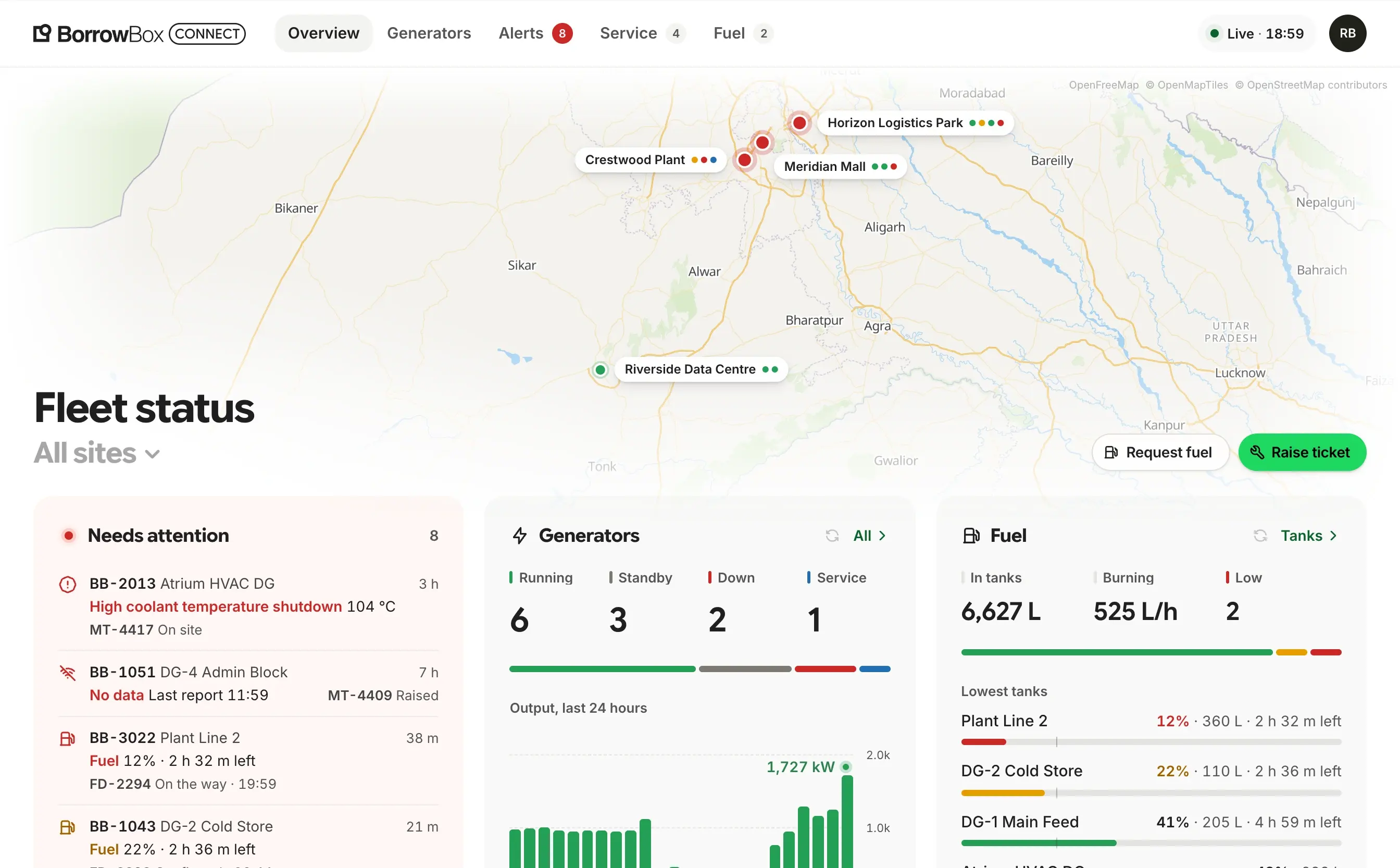
Generator alarm notifications let a site learn about faults, low fuel or unexpected shutdowns without someone standing beside the equipment. The technology is only part of the answer. This guide explains how to decide which alarms matter, who should receive them, how they escalate and how the team records what happened.
Choose which generator alarm notifications matter
List the alarms the generator controller or monitoring system can produce. Work with the maintenance or monitoring provider to decide which ones need immediate attention, which can wait for routine review and which are informational.
Too many notifications can lead people to ignore them. Start with the alarms that affect power continuity, safety and fuel, and add others when the team is comfortable with the process.
Agree with the provider what each alarm means in plain language. A recipient who understands the alert can decide on the next step faster than one who has to look up a code.
Assign recipients for each alarm
Decide who should receive each type of alarm. Some alerts suit the facility team, others the maintenance provider and some need both. Consider who is on duty at different times.
| Alarm type | Primary recipient |
|---|---|
| Unexpected shutdown | Facility team and maintenance provider |
| Low fuel level | Facility team and fuel provider |
| Communication loss | Monitoring provider and facility team |
| Service reminder | Maintenance provider |
Define escalation steps
Agree what happens if the first recipient does not acknowledge an alarm. Name the next contact and the method of escalation. Keep the contact list current when staff or providers change.
Test the notification and escalation process periodically. A test confirms that messages reach the right people and that contact details are correct.
Write the escalation steps down and share them with every recipient. People who know where the alert goes next are less likely to assume that someone else has already acted.
Record how each alarm was handled
Log each significant alarm along with who responded, what action was taken and the outcome. This record helps identify repeated issues and shows whether the response process is working.
Share the log with the maintenance provider during service reviews. Patterns in alarms can point to equipment problems that need assessment.
Note false or repeated alarms separately. If the same alert appears without a real fault, ask the provider to review the setting rather than letting the team learn to ignore it.
Review the alarm plan regularly
Review the alarm list, recipients and escalation steps when equipment, staff or providers change, and periodically otherwise. Remove alarms that add noise and add any that the team has missed.
Keep the current plan with the site's operating documents. Everyone who receives alarms should know where to find it.
Include the alarm plan in the induction for new facility staff and in handovers between shifts. A plan that only one person understands will not help when that person is unavailable.
Common questions about generator alarm notifications
What are generator alarm notifications?
They are alerts from the generator controller or monitoring system about faults, fuel, shutdowns or other conditions.
Which alarms should be enabled first?
Start with alarms affecting power continuity, safety and fuel. Add others once the team is comfortable with the response process.
Who should receive alarms?
Assign recipients by alarm type, considering the facility team, maintenance provider, fuel provider and who is on duty.
What if nobody responds to an alarm?
Define escalation steps with named contacts and test them periodically so alerts reach someone who can act.
Should alarms be logged?
Yes. Recording the response and outcome helps identify repeated issues and improve the process.
How often should the alarm plan be reviewed?
When equipment, staff or providers change and periodically otherwise, so the plan stays useful.
Make every alert actionable
Choose the alarms that matter, route them to the right people and record the response. That is what turns monitoring into action.
Start with the readings and operating decisions your site needs to support. Discuss generator monitoring for your site