Generator maintenance
Generator Repair: Prepare for a Service Assessment
Prepare for generator repair with an asset history, clear observations and questions about assessment, proposed work and follow up.
By BorrowBox ·
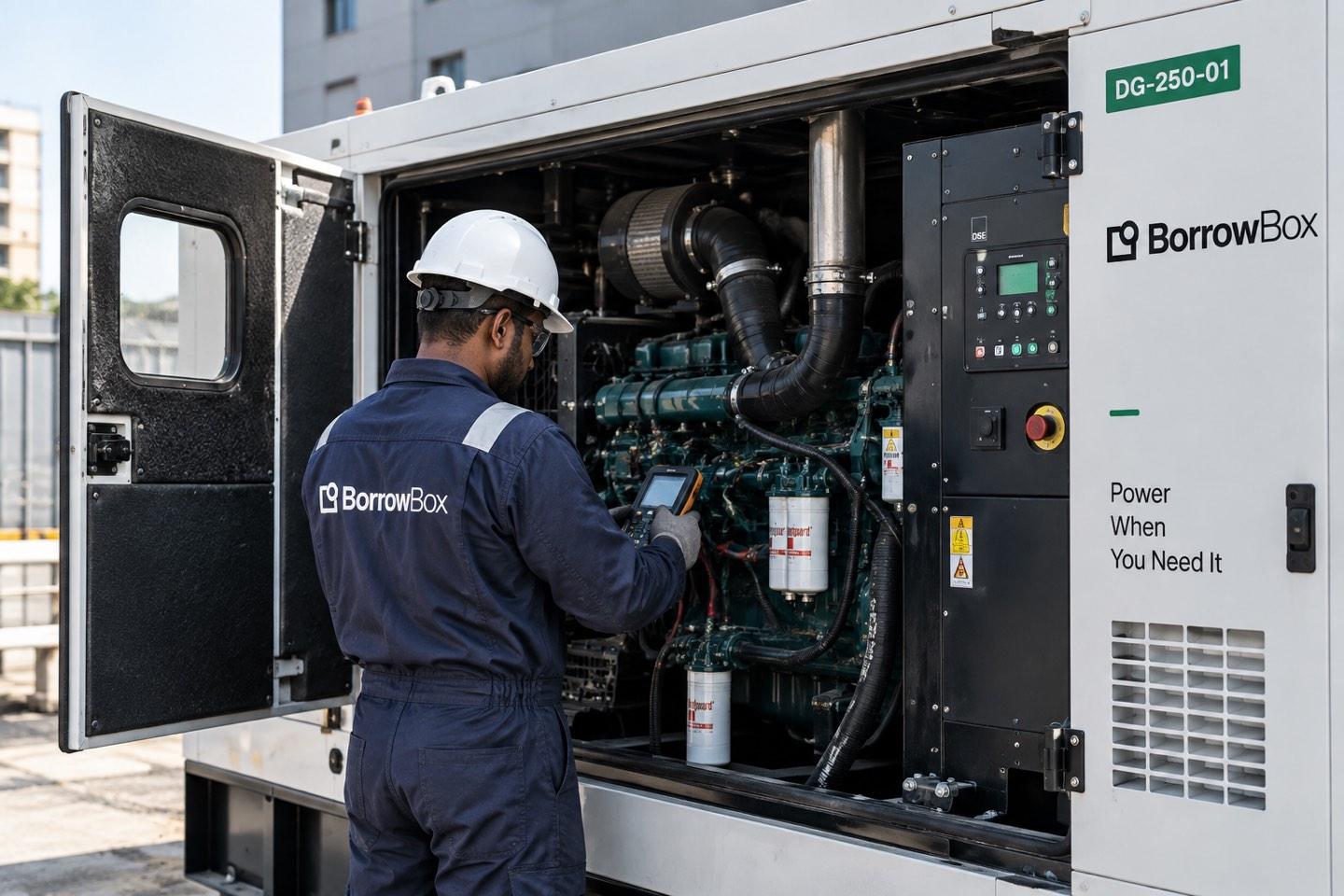
Generator repair should begin with a technical assessment of the actual equipment and the observations that prompted the enquiry. For a facility or asset manager, the useful preparation is an accurate history and a clear set of questions about the proposed work. This guide covers a planned service conversation and quotation review, rather than instructions for diagnosing or repairing equipment yourself.
Prepare the generator repair enquiry
Identify the asset, site and available model information. Describe what was observed, when it occurred and whether the equipment's operating arrangements have changed. Include relevant controller messages or earlier reports where they are available through the site's authorised process.
Separate confirmed observations from explanations suggested by others. A statement about what the generator did gives the service team something to assess. A claimed diagnosis without supporting assessment can narrow the conversation too early and leave other questions unexamined.
Bring the service history into the discussion
Collect the available maintenance reports, earlier repairs and outstanding recommendations. Note whether recommended work was completed, deferred or never confirmed. The history is more useful when it shows the outcome of earlier decisions rather than a series of visit dates without the associated findings.
If the records are incomplete, say so. Ask the provider which missing information affects its assessment and how the proposed next step addresses that gap. The conversation should make uncertainty visible instead of allowing an estimate to look more complete than the available information supports.
Understand assessment and repair as separate scopes
Ask what the initial assessment covers and what report or findings the provider will supply. Clarify which further work would need another authorisation. A booking for an assessment should not leave the purchasing team unsure whether it also authorised additional labour, parts or other activities.
Discuss the equipment condition and operating arrangements with the responsible technical personnel. They should identify any limitations in the assessment and the process for determining the appropriate next step. Keep those recommendations attached to the asset record and available to the person approving the work.
Read a repair quotation against the finding
Ask the quotation to identify the work proposed, relevant parts information, commercial assumptions and anything excluded or still subject to confirmation. Connect each proposed item to the assessment where practical. If the description is too broad, request clarification before comparing it with another proposal.
Agree how changes discovered during the work will be reported and authorised. Keep the original scope and subsequent approvals distinguishable. That gives the site and purchasing teams a clearer record when the final report and invoice arrive.
Plan the handover after the work
Ask for a record of the work performed, observations made and outstanding recommendations. The responsible technical team should explain the return to operation under the applicable site process. A note that the equipment was repaired does not replace a useful handover record.
Record any follow up related to maintenance planning, operating arrangements or further assessment. Assign an owner and a review point. If the same observation is reported again, the next service discussion can then begin with what was previously assessed and completed.
Common questions about generator repair
Can a repair price be confirmed from a short description?
A description can help a provider understand the enquiry, but the required scope may depend on assessment. Ask what is confirmed and which parts of the proposal remain estimates.
What should be shared before a service visit?
Provide the asset identity, location, observed issue and available service history. Include the current site contact and any access information needed to arrange the assessment.
Is assessment the same as authorising repairs?
Clarify the booking scope and authorisation process. Ask which work is covered initially and how additional findings, parts or repair activities would be proposed for approval.
How should competing repair proposals be compared?
Compare the finding, proposed work, assumptions and exclusions on a common basis. A lower amount alone does not explain whether the proposals address the same assessed requirement.
What if the service history is missing?
Identify the gap and ask how it affects the proposed assessment. Avoid presenting an unverified maintenance history as a confirmed record of work already completed.
What should a closing report contain?
Ask for the work performed, relevant findings, handover information and unresolved recommendations. Keep the report linked to the asset and identify who owns any follow up.
Make the repair decision traceable
Use the asset history and assessment to understand the proposal before approving work. A clear record makes both the repair handover and the next maintenance discussion easier to manage.
Bring the asset record, service history and open questions to a maintenance discussion. Discuss a generator maintenance plan