Rental
Backup Generator Rental for Commercial Sites
Evaluate backup generator rental for commercial facilities, offices, and critical operations to maintain reliable power during grid outages.
By BorrowBox ·
A backup generator rental provides temporary electrical power to keep commercial facilities, offices, and critical operations running when the main utility grid fails. Commercial properties face sudden grid drops, planned substation maintenance, and seasonal power cuts that interrupt everyday activity. Securing a temporary generator helps facility managers bridge these interruptions without heavy capital investment in new machinery. Selecting the right setup requires evaluating your actual power demand, connection points, site space, and fuel logistics.
Why Commercial Facilities Choose Standby Power Rentals
Commercial buildings depend on continuous electricity to run essential building systems, computer networks, elevators, and ventilation machinery. A sudden loss of electricity can halt office productivity, spoil cold inventory in food processing centres, or stop server rooms from functioning. For many businesses, owning permanent standby equipment involves large upfront purchase costs, ongoing depreciation, and routine servicing expenses that may not fit current financial priorities.
Renting a generator provides flexibility. A business can bring in equipment for specific timeframes, such as peak summer months when grid stability wavers, or during scheduled utility upgrades. Facility directors can also size the equipment precisely for current operational demands rather than buying a massive unit to accommodate theoretical future expansions. If power needs change, swapping out rental units is far simpler than replacing permanent infrastructure.
Understanding Backup Versus Standby Power Roles
People often use standby power and backup power interchangeably, but engineering teams view them through distinct operational lenses. Standby power usually refers to a continuous readiness posture where equipment stands idle until an automatic transfer switch detects a grid failure and signals an immediate startup. Critical systems like server rooms, emergency lighting, and water pressure pumps often require standby configurations because interruptions must remain brief.
General backup power can refer to planned auxiliary power where a slight operational delay is acceptable. In an office complex, non essential loads such as decorative foyer illumination or comfort heating may wait for facility teams to start a unit manually or shed non critical circuits. Clarifying which operational posture your business requires helps determine whether you need automated controls, manual panels, or specialized synchronisation hardware.
Electrical Load Assessment and Capacity Planning
Choosing the correct capacity is one of the most critical steps in the rental process. Selecting an undersized generator leads to circuit trips and potential damage to sensitive electronics. Conversely, selecting a unit that is far too large leads to wet stacking, an issue where diesel engines run with insufficient cylinder heat, causing unburned fuel and carbon deposits to foul the exhaust system.
A thorough load assessment involves checking running power and startup power across all connected equipment. Large electric motors in central air conditioning chillers, ventilation fans, and water booster pumps require significant starting current that can be multiple times their steady running rating. Facility managers should audit their distribution panels and consult qualified electrical engineers to separate essential distribution boards from secondary circuits.
| Factor | Standby Application | Continuous Auxiliary Application |
|---|---|---|
| Switchgear Type | Automatic transfer switch tied directly to building mains | Manual changeover switch or temporary distribution board |
| Operating Profile | Intermittent running during unexpected utility failures | Extended running during scheduled outages or peak shifting |
| Fuel Tank Approach | Standard sub base tank kept full for sudden starts | Auxiliary bulk fuel storage with scheduled bulk refills |
| Site Monitoring | Periodic load bank tests and sensor checks | Continuous shift monitoring of temperatures and fuel levels |
| Acoustic Priority | Moderate priority depending on outdoor placement | High priority due to ongoing sound exposure across work shifts |
Site Readiness and Physical Layout Planning
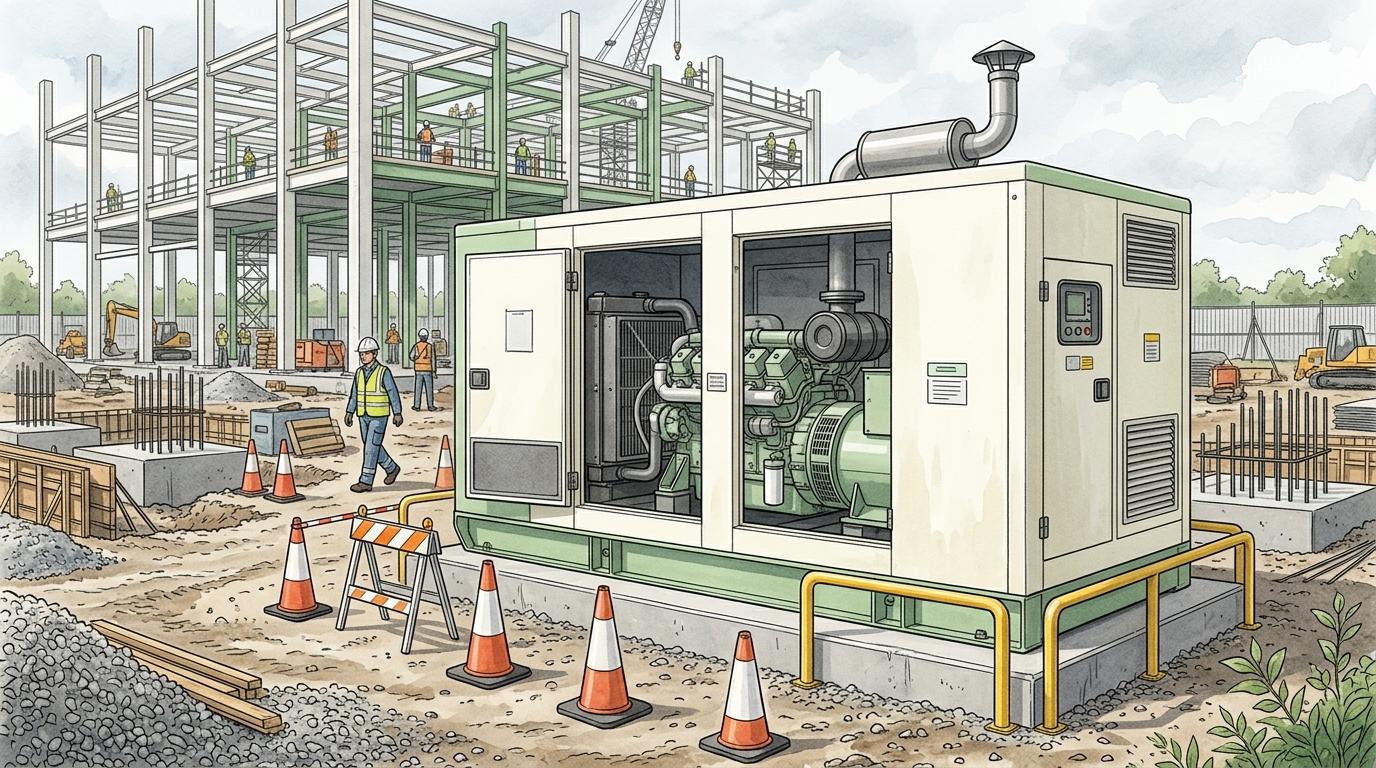
Deploying temporary power equipment at an active commercial property requires careful physical site planning. A generator requires more than just parking space. It demands adequate ventilation clearance, safe routing paths for electrical cables, sound buffering, and convenient access for fuel delivery trucks.
- Confirm that the ground surface is level and capable of holding the full weight of the generator, including a full tank of fuel.
- Position the unit outdoors away from fresh air ventilation intakes, operable windows, and building entrances to prevent engine fumes from entering occupied spaces.
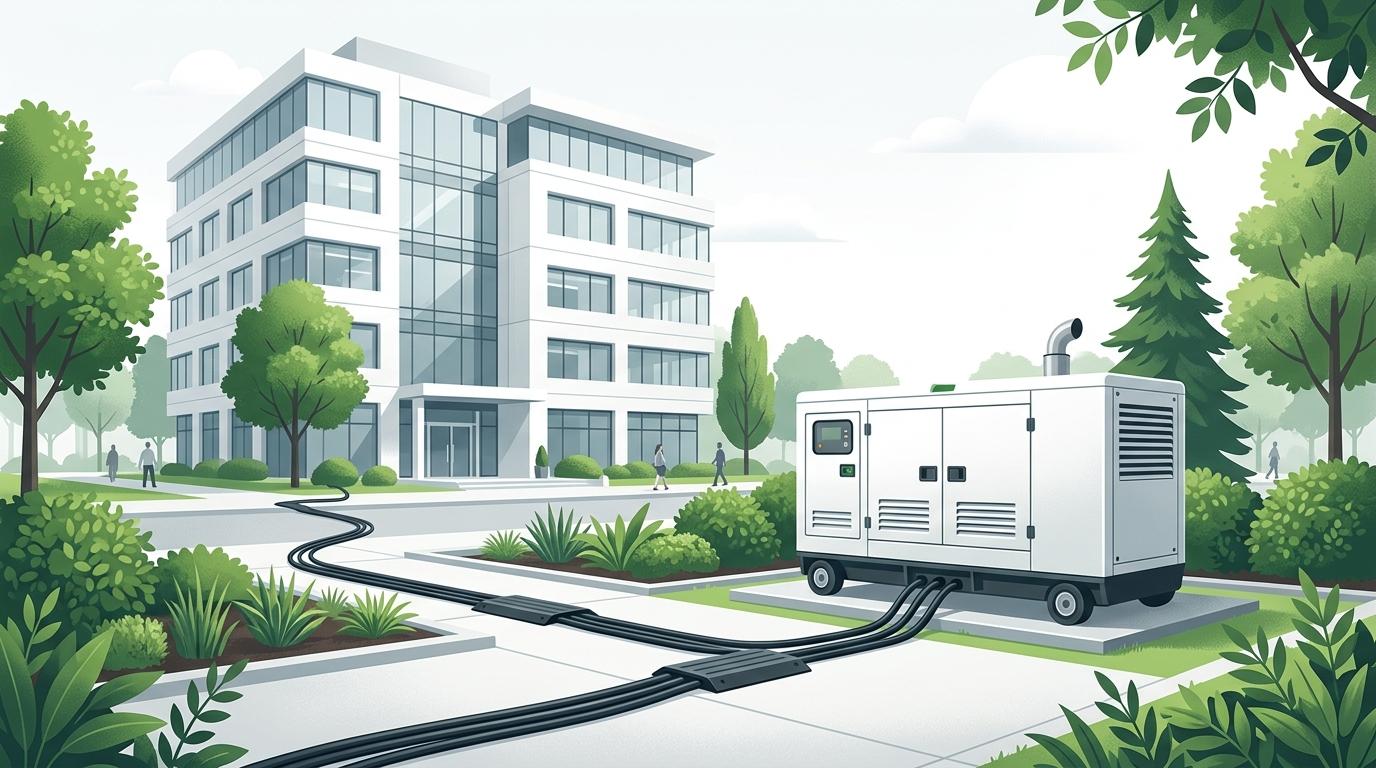
- Map out the path for temporary power cables from the generator to the building connection panel, avoiding pedestrian walkways and high traffic vehicle lanes.
- Provide sufficient perimeter space around the canopy so technicians can easily access service doors for inspections, oil checks, and fuel drops.
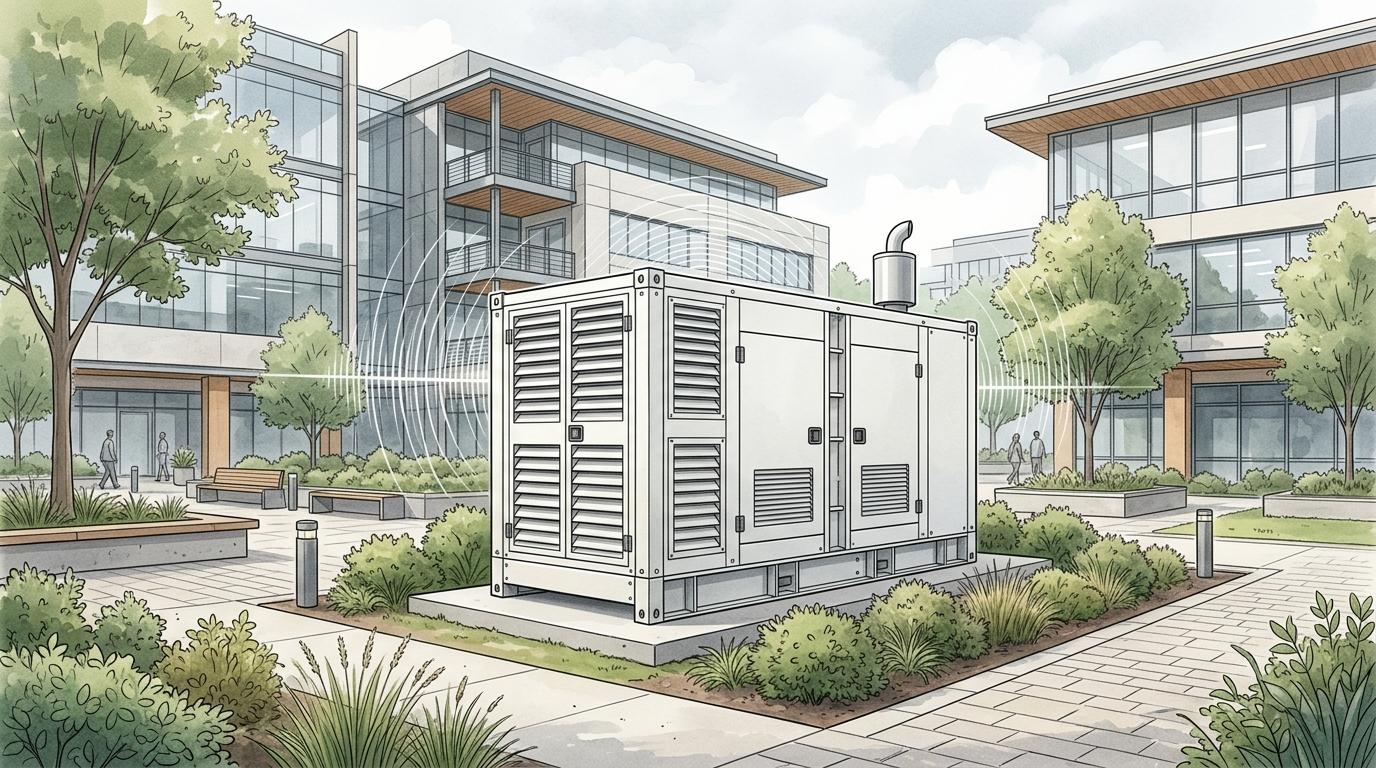
If the unit must sit near customer entrances or office windows, acoustic canopies help dampen engine sound. Review local municipal noise ordinances and discuss acoustic specifications with potential equipment suppliers before signing an agreement.
Connecting to Building Switchgear and Distribution
The transfer switch serves as the central bridge between the utility grid, the rental generator, and your building panels. An automatic transfer switch monitors grid voltage. When utility power drops below acceptable parameters, the switch signals the generator to start and switches the building load over once the generator frequency and voltage stabilize. When the utility feed returns to normal, the switch transfers the load back and lets the generator idle for a brief cooling interval.
Connecting a rental generator requires planning the electrical interface. Commercial facilities should verify whether their main distribution boards have an existing manual or automatic changeover switch, or if temporary tie in switchgear must be supplied. Electrical staff should inspect terminal lug sizes, phase rotation alignment, and neutral earthing arrangements before delivery day to avoid unexpected connection delays.
Fuel Management and Refueling Routines
A standby generator is only as dependable as its fuel supply. Diesel engines require clean fuel that is free from water and sediment contamination. During unexpected utility outages, a generator running at high capacity can consume hundreds of litres of fuel over a standard work shift.
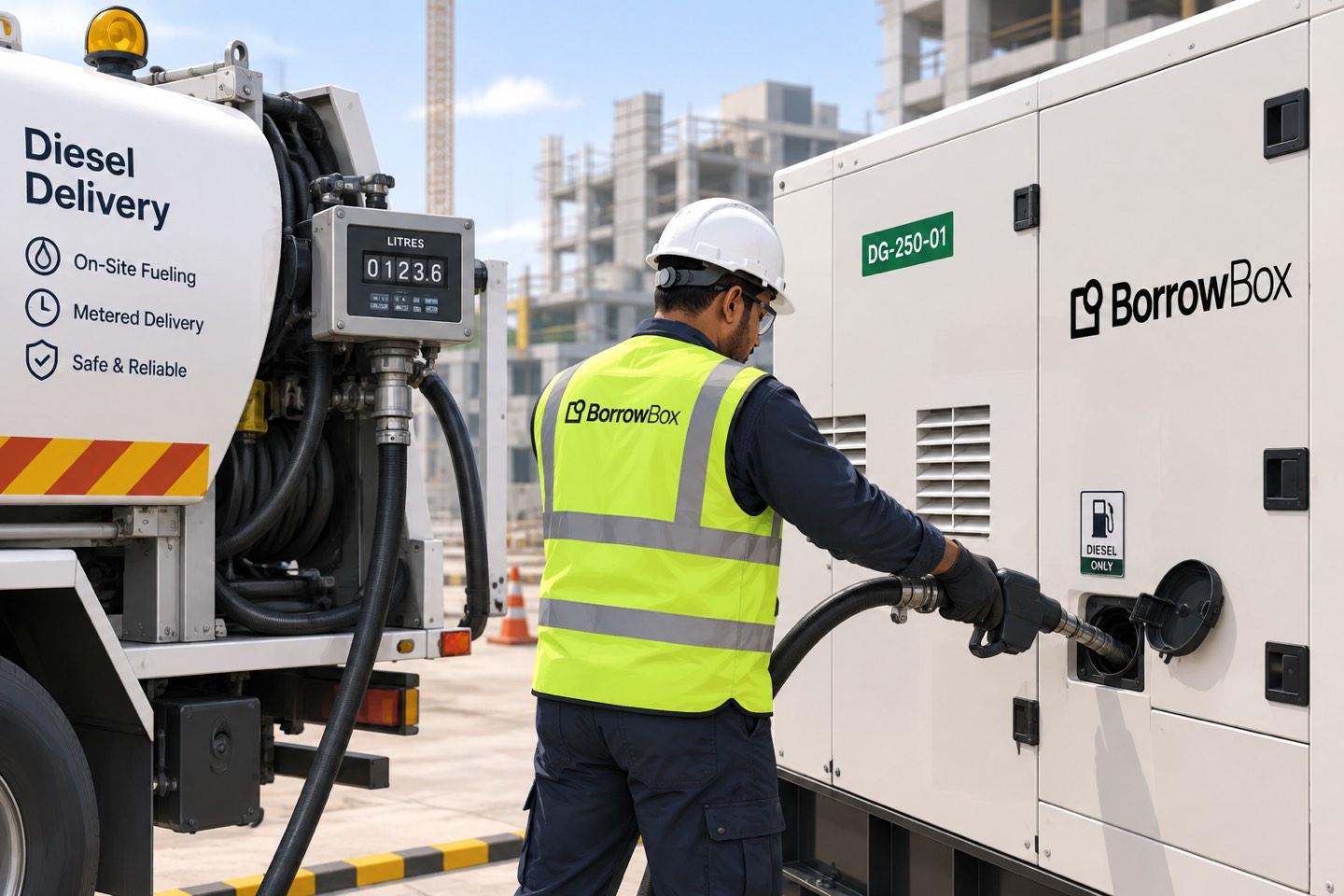
Facility managers must establish a clear plan for refueling. Determine whether your internal facilities crew will purchase and handle fuel, or whether your rental provider can deliver scheduled diesel top ups. For installations running over extended periods, adding a secondary external fuel tank reduces the need for frequent fuel truck visits and lowers the risk of running dry during prolonged grid blackouts.
Frequently Asked Questions About Backup Generator Rental
How do I determine the right generator size for my office building?
Review historical electricity bills to check peak kilowatt usage, and have an electrician calculate the startup demands of critical equipment such as elevators, chillers, and emergency lighting systems.
Can a rental generator connect directly to my existing building panel?
Yes, provided your building panel contains a compatible transfer switch and connection terminals rated for the incoming electrical amperage and voltage.
Who takes care of equipment maintenance during the rental period?
Maintenance responsibilities depend on your rental contract. Suppliers commonly handle scheduled filter changes and mechanical servicing, but daily operational checks must be clarified before signing.
How much space is needed around a temporary generator installation?
Most setups require clear ground on a firm outdoor surface with several feet of clearance on all sides to allow proper engine cooling, door access, and ventilation.
Do commercial properties require sound attenuated generators?
Most urban offices, hospitals, and educational facilities select sound attenuated canopy enclosures to keep noise levels manageable for occupants and nearby properties.
What steps are required before the generator arrives on site?
Inspect the delivery route, confirm crane or forklift access, prepare the placement surface, establish cable transit paths, and verify termination lugs at the transfer panel.
Planning your standby power needs early prevents operational confusion when utility outages strike. Assess your facility loads, check site access, and collaborate with a trusted power equipment provider to select a setup that fits your operational needs.
Evaluate your facility requirements and get a detailed quote for temporary power equipment. Get a Standby Generator Rental Quote