Fuel
Diesel Fuel for Generators: Site Planning and Usage
Plan diesel fuel for generators effectively. Learn key consumption drivers, storage choices, fuel quality factors, and site supply planning.
By BorrowBox ·
Diesel fuel for generators powers essential backup and continuous electricity systems across industrial facilities, construction projects, data centers, and corporate parks. Estimating consumption accurately requires calculating real load percentages, anticipated operational runtimes, and ambient site conditions rather than relying on manufacturer nominal ratings alone. Effective fuel management also demands systematic quality preservation, strategic buffer reserves, and scheduled replenishment routines so that power equipment operates predictably whenever grid outages occur.
Managing diesel fuel for generators involves understanding both consumption mechanics and fuel logistics. A generator running at partial capacity uses significantly less diesel than one running near full capacity, yet running engines at very low loads can create unburned fuel accumulation known as wet stacking. Balancing electrical demand with appropriate generator sizing forms the starting point for any disciplined fuel planning exercise.
Primary Drivers of Generator Diesel Consumption
Several technical and operational variables influence how rapidly an engine consumes diesel fuel during field operations. Load profile stands out as the primary determinant. Modern diesel engines adjust fuel injection volumes based on electrical power draw. While full capacity operations consume the highest volume of liters per hour, running at moderate loads generally represents better thermal efficiency for standard industrial engines.
Operating duration and cycling frequency also shape overall diesel demand. Continuous prime power duty cycles require regular fueling shifts and predictable delivery rhythms. In contrast, standby units experience intermittent starts with sudden spikes in fuel usage during emergency grid dropouts. Ambient environmental conditions introduce further variance. High ambient heat decreases air density, which alters combustion efficiency, whereas cold environments can thicken diesel viscosity and elevate fuel demand during engine warm up intervals.
Equipment age and mechanical maintenance history directly affect fuel economy. Dirty air intake filters restrict airflow, forcing engines to burn more fuel to maintain electrical frequency. Similarly, worn fuel injectors that fail to atomize diesel properly produce incomplete combustion, elevated exhaust emissions, and higher fuel burn rates. Regular mechanical upkeep and prompt sensor calibration help keep fuel usage aligned with expected baseline performance.
Fuel Storage Configurations for Commercial Sites
Selecting an appropriate storage configuration depends on site footprint, safety clearances, and project duration. The following qualitative breakdown reviews common fueling methods used across commercial installations.
| Storage Method | Operational Role | Primary Advantages | Site Considerations |
|---|---|---|---|
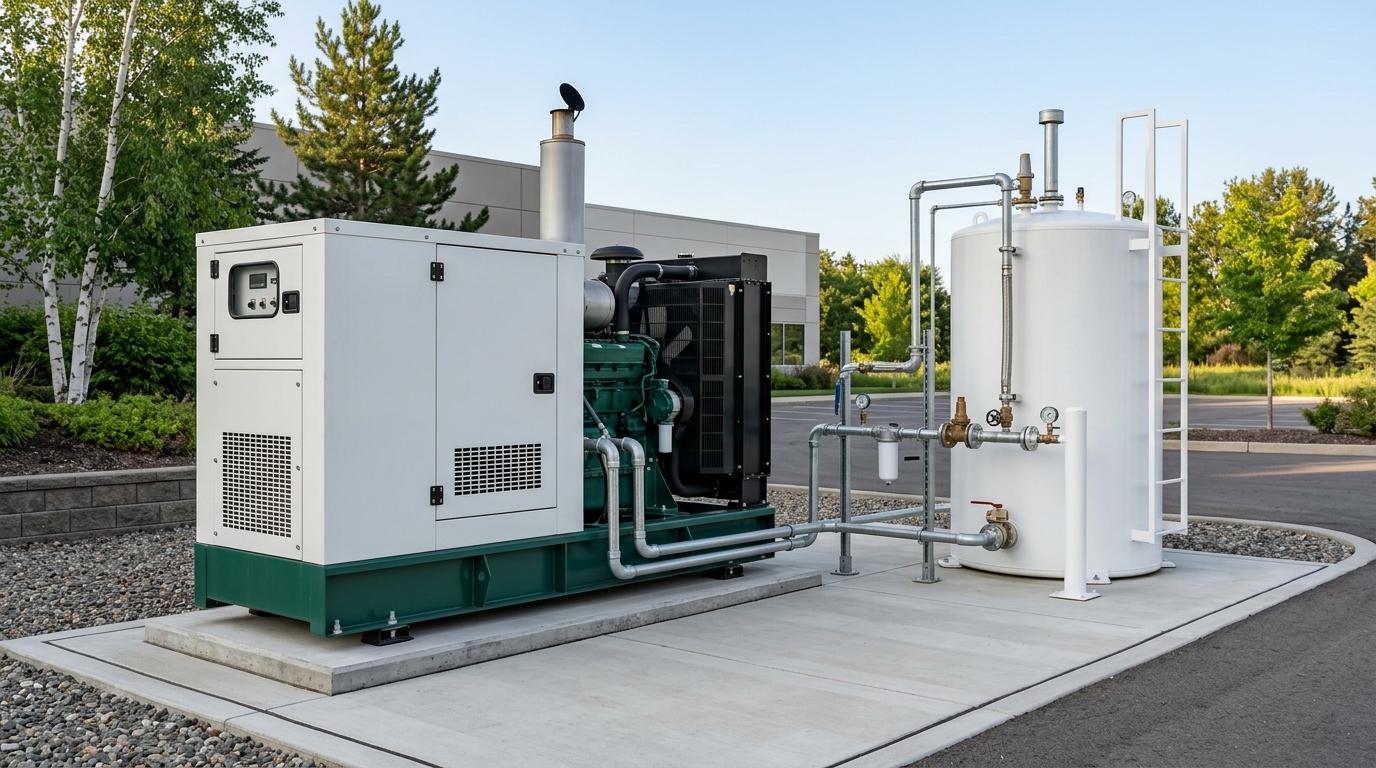
| Integrated Sub Base Tank | Standard equipment day tank located beneath generator skid | Compact footprint with minimal external piping required | Limited capacity requiring frequent replenishment during prolonged outages |
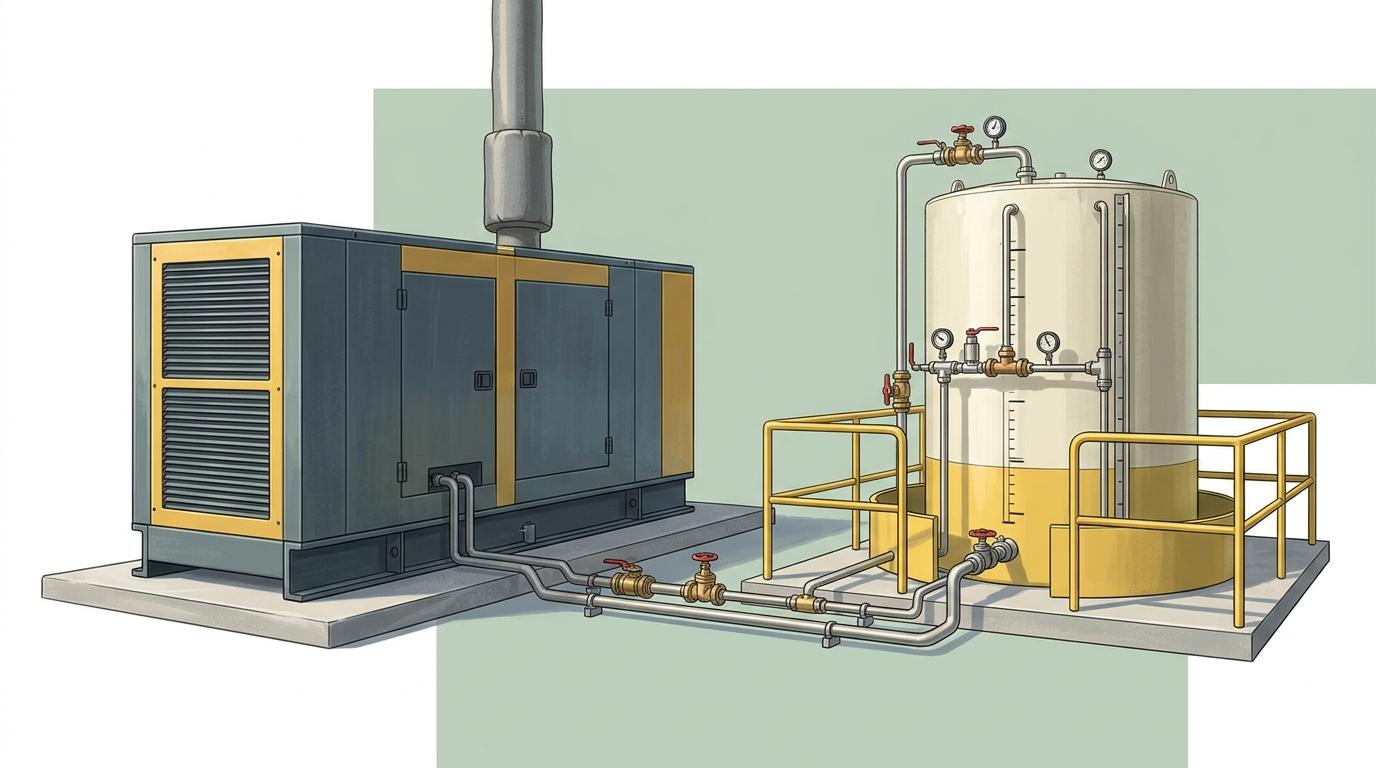
| Dedicated External Bulk Tank | Stationary secondary reservoir connected to generator day tank | Extended autonomous runtime and reduced delivery frequency | Requires dedicated site ground space and secondary containment spill bunds |
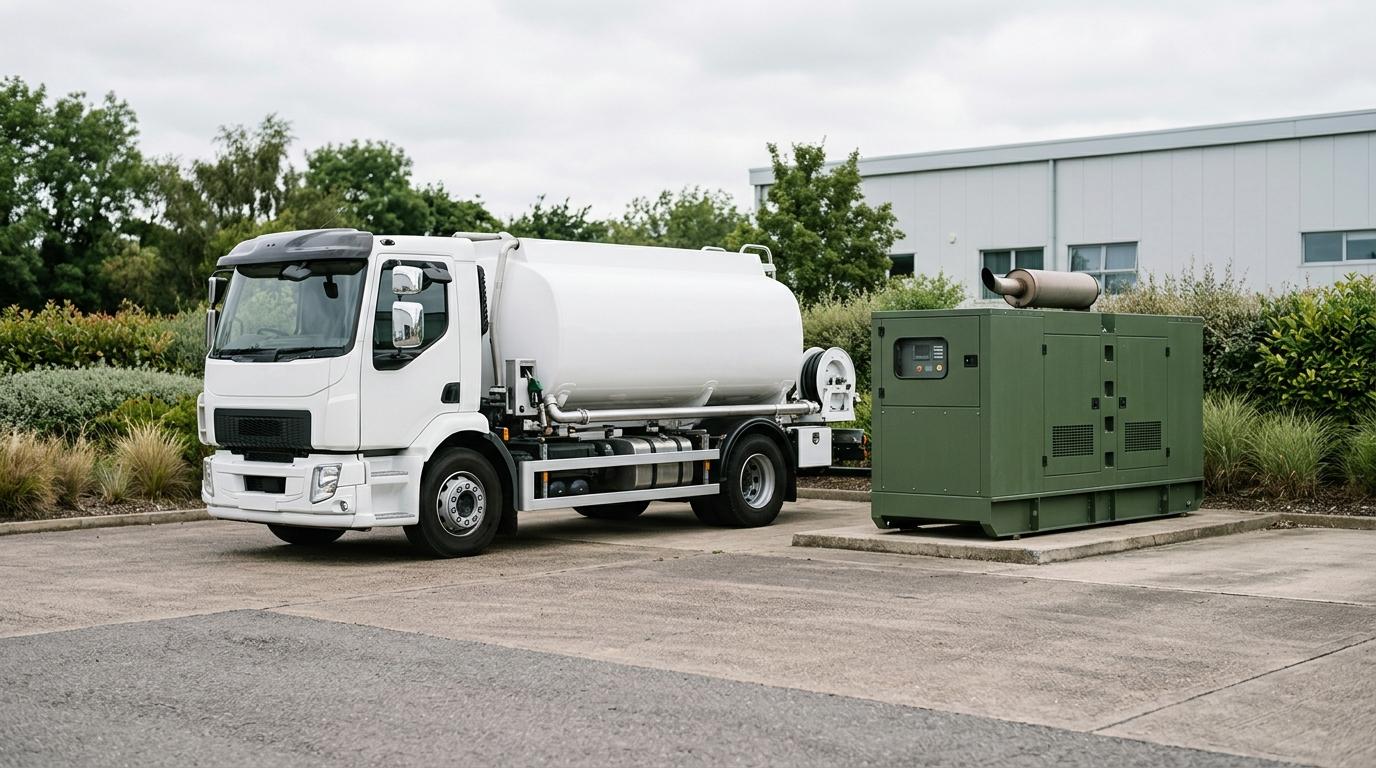
| Mobile Fuel Bowser | Transportable trailer or vehicle tank for flexible site distribution | High flexibility across distributed equipment locations | Demands secure site access roads and scheduled transfer procedures |
Facility managers often combine these methods by pairing an integrated sub base day tank with a bulk storage vessel or scheduled tanker top ups. The optimal setup balances space constraints against the required runtime buffer during prolonged grid interruptions.
Estimating Site Diesel Demand and Usable Volumes
Forecasting diesel requirements helps prevent unexpected fuel starvation during critical power outages. Teams should begin by auditing actual kilowatt demand across designated critical circuits. Many facility operators overestimate steady state demand by summing up peak nameplate ratings of all connected machinery. Measuring true running load yields a much more realistic fuel consumption baseline.
After establishing average electrical draw, estimate realistic operational durations based on local grid stability records or project shift lengths. Multiply the expected hourly burn rate for that load level by total planned runtime hours. For instance, if an industrial unit consumes forty liters per hour under anticipated load, a twelve hour outage window will require four hundred and eighty liters of usable fuel.
Always incorporate an operational safety buffer. Fuel pickups inside storage tanks sit slightly above the tank bottom to avoid drawing settled sludge or condensation into fuel lines. Consequently, the lowest ten to fifteen percent of tank volume may remain unusable during live operation. Adding a practical reserve over calculated consumption protects against extended outages, delivery traffic delays, or unexpected load spikes.
Fuel Quality Management and Storage Degradation
Diesel fuel does not remain stable indefinitely. When stored for extended intervals in standby generator tanks, diesel naturally degrades through oxidation, temperature fluctuations, and environmental moisture absorption. Microscopic water droplets condense on internal tank walls as ambient temperatures cycle between day and night. This moisture accumulates at the bottom of the tank, creating a breeding environment for microbial colonies.
Microbial proliferation produces acidic sludge that clogs fuel filters, corrodes fuel lines, and damages precision fuel injectors. Facility operators should perform visual clarity inspections and take periodic fuel samples from tank bottoms. Fuel polishing systems, which circulate stored diesel through multi stage filtration and water separation units, help maintain fuel purity over long standby periods without requiring complete fuel disposal.
Practical Fuel Handling Protocols on Site
Implementing structured site procedures protects personnel and power continuity during manual or automated fuel transfers. Operational teams should review these practical guidelines before arranging deliveries:
- Verify that all storage vessels feature double wall construction or secondary containment bunds to capture accidental spills.
- Establish clear, unobstructed access paths for fuel delivery trucks, accounting for turning radius and ground load bearing capacity.
- Turn off the generator engine or confirm safety clearances during direct manual fueling to reduce thermal ignition hazards.
- Maintain spill response kits containing absorbent pads and booms immediately adjacent to all fuel transfer points.
- Record fuel deliveries with calibrated meter readings to track consumption trends and detect potential tank leaks early.
- Inspect fuel vents and flame arrestor caps regularly to keep water, dust, and insects out of clean fuel supplies.
Frequently Asked Questions About Generator Diesel Fuel
How does electrical load alter diesel fuel consumption?
Diesel consumption scales upward as electrical demand rises. An engine running at full load consumes substantially more fuel per hour than one operating at half load. However, specific fuel consumption per kilowatt hour produced is usually higher at very low loads, meaning engines generate electricity most efficiently when moderately loaded.
How long can diesel fuel sit in a generator tank before degrading?
Unconditioned diesel fuel generally begins oxidizing within several months under typical ambient storage conditions. Extreme ambient heat and humidity accelerate this degradation process. Adding specialized fuel stabilizers and running periodic fuel filtration cycles can help prolong fuel usability across standby installations.
Why does water accumulate inside diesel fuel tanks?
Atmospheric humidity enters storage tanks through pressure relief vents. As temperatures drop overnight, water vapor condenses on exposed interior metal surfaces and trickles down below the diesel layer. Keeping tanks relatively full minimizes exposed air space, thereby reducing condensation rates significantly.
How should facility teams determine an onsite fuel reserve buffer?
Buffer requirements depend on local transport access, vendor dispatch terms, and the criticality of supported operations. Rather than adopting a generic buffer, facility teams evaluate historical grid outage patterns alongside supplier delivery turnaround agreements. Sites in congested urban pockets or isolated project zones often plan additional margin to account for potential logistical bottlenecks during severe weather or transport disruptions.
Can cold weather affect diesel fuel performance in backup power units?
Cold temperatures can cause paraffin wax in diesel fuel to crystallize, a condition known as gelling. Gelled fuel quickly blocks fuel lines and fine engine filters. Facilities operating in colder climates often utilize winterized fuel blends, anti gelling fuel additives, or electric fuel line heaters.
What questions should facility teams ask fuel supply partners?
Teams should confirm the supplier delivery response timeframe during regional power emergencies, tanker meter calibration routines, minimum order quantities, and fuel filtration standards prior to offloading. Clarifying these operational details ahead of time prevents unexpected delivery disputes when emergency power is urgently required.
Learn more about diesel fuel delivery planning, storage options, and commercial generator support across India. Explore BorrowBox Diesel Fuel Solutions