Fuel
Diesel Generator Rental Cost: Fuel Budgeting Guide
Manage total diesel generator rental cost by forecasting fuel burn rates, calculating delivery overheads, and planning commercial site reserves.
By BorrowBox ·
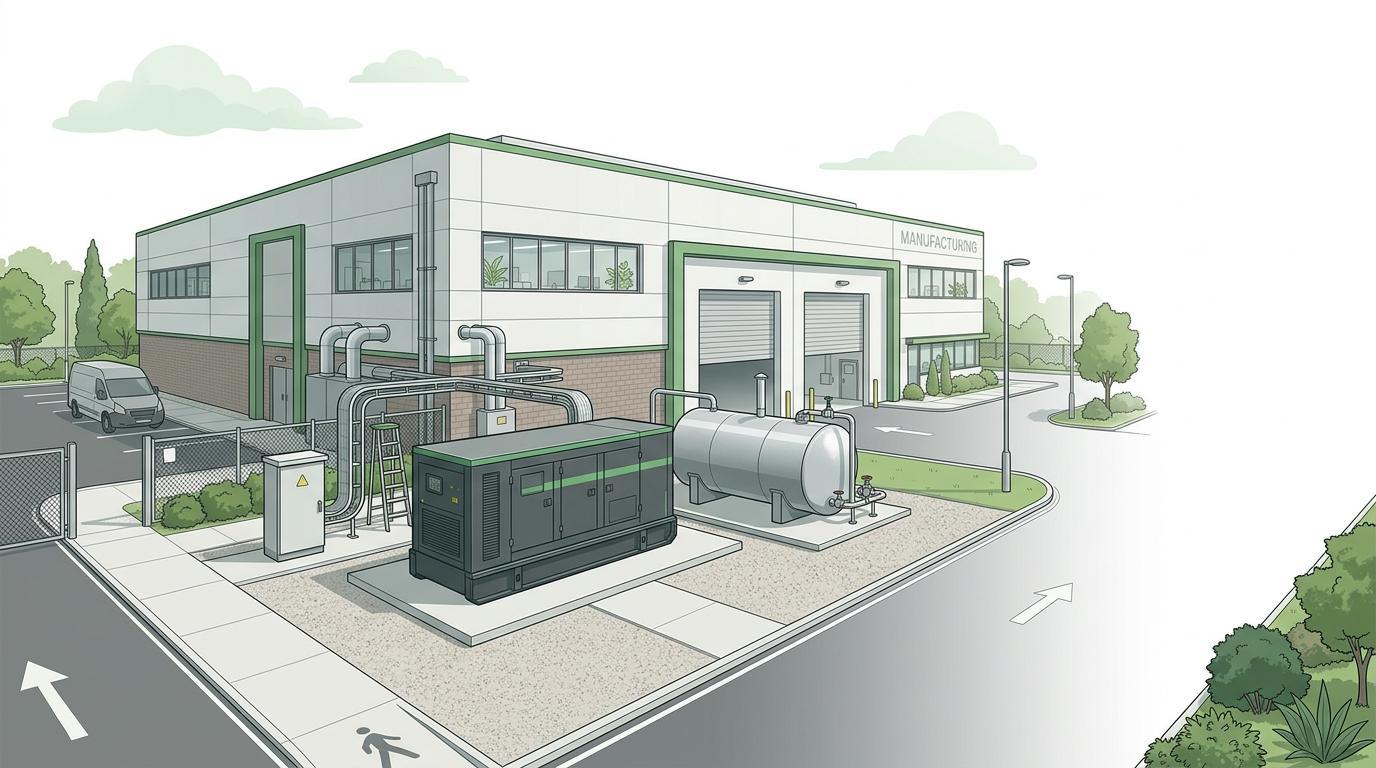
Estimating your total diesel generator rental cost requires calculating operational fuel consumption, which often equals or exceeds equipment hire fees over multi week projects. To budget accurately, multiply the expected operational hours by the hourly fuel burn rate at your projected electrical load percentage, then add logistics delivery charges, storage allowances, and a fifteen percent operational reserve. Factoring fuel into overall generator budgeting early prevents unexpected operating deficits and stabilizes commercial utility expenses.
Why Fuel Dominates Operational Power Expenses
When commercial facilities hire temporary power equipment, initial discussions usually focus on monthly hire rates and initial mobilisation charges. However, ongoing fuel expenses represent the largest variable cost across the operational lifecycle of a generator deployment. For facilities running continuous shifts or prime power operations, fuel bills can surpass the base machinery hire fee within weeks of runtime.
Treating diesel procurement as an afterthought often results in significant budget variances. Regional pricing changes, site delivery access constraints, transport fees, and unexpected runtimes during grid power outages quickly increase actual expenditure. Developing a predictable fuel budget requires understanding how specific operational choices and site conditions influence overall diesel burn.
Core Variables Influencing Total Generator Fuel Spend
Several technical and operational variables determine actual diesel consumption on commercial sites. The most critical factor is the average running load applied to the generator. Generators do not burn diesel at a uniform rate; an engine supporting base lighting uses substantially less fuel than the same unit starting large chiller motors or industrial equipment.
Operating conditions also play a meaningful role in overall efficiency. Extended machine idling during shifts consumes diesel without delivering productive electrical output. Ambient temperature, ventilation around the canopy, phase load balancing, and equipment maintenance status also influence thermal performance and fuel consumption. Furthermore, transport frequency and local delivery access affect total procurement expenses, as frequent small deliveries often incur higher transport surcharges than scheduled bulk tanker drops.
Qualitative Comparison of Generator Operating Load States
Engine combustion efficiency varies significantly across load ranges. Industrial diesel engines generally reach optimal thermal efficiency when loaded between sixty and eighty percent of their prime rating. Running significantly outside this band alters fuel economy and equipment reliability.
| Operational Load State | Combustion Efficiency | Fuel Budget Impact | Operational Site Considerations |
|---|---|---|---|
| Light Load below thirty percent | Low thermal efficiency | High cost per kilowatt hour delivered | Incomplete combustion can cause unburned fuel buildup in exhaust systems |
| Optimal Band sixty to eighty percent | High combustion efficiency | Most predictable fuel expenditure | Recommended operating target for continuous commercial power generation |
| High Load above eighty five percent | Acceptable thermal efficiency | Elevated hourly fuel consumption | Higher mechanical stress requires careful monitoring during extended runs |
| Extended Idle Periods | Zero electrical generation | Unproductive fuel waste | Review operational shift schedules to shut down equipment when power is unneeded |
Systematic Process for Building a Generator Fuel Budget
Facility managers can calculate a reliable fuel forecast by executing a structured estimation process before renting equipment:
- Define planned operating hours by assessing daily operational schedules, historical local grid reliability, and anticipated standby runtimes.
- Determine average and peak kilowatt demand to identify the realistic operational load percentage rather than relying on nameplate machine ratings.
- Consult manufacturer or rental provider fuel consumption curves to identify estimated litres consumed per hour across expected load bands.
- Add an operational contingency margin between ten and fifteen percent to account for weather conditions, motor startup spikes, and unplanned grid failures.
- Include supply chain expenses such as transport delivery fees, decanting labor, on site containment infrastructure, and periodic tank maintenance.
Commercial Site Fuel Planning and Storage Checklist
Proper on site fuel handling and logistics planning protect operational budgets and prevent unnecessary delivery delays. Commercial teams should verify several practical details prior to equipment delivery:
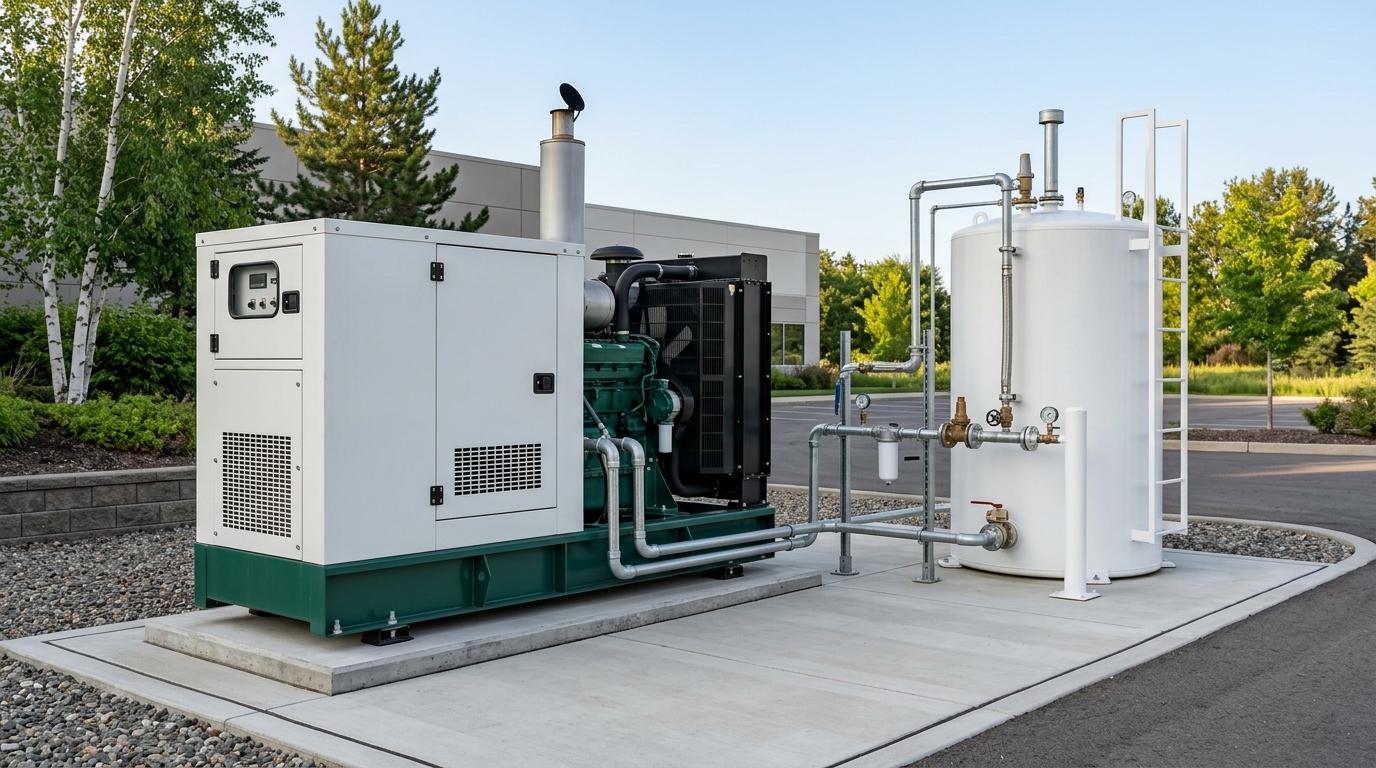
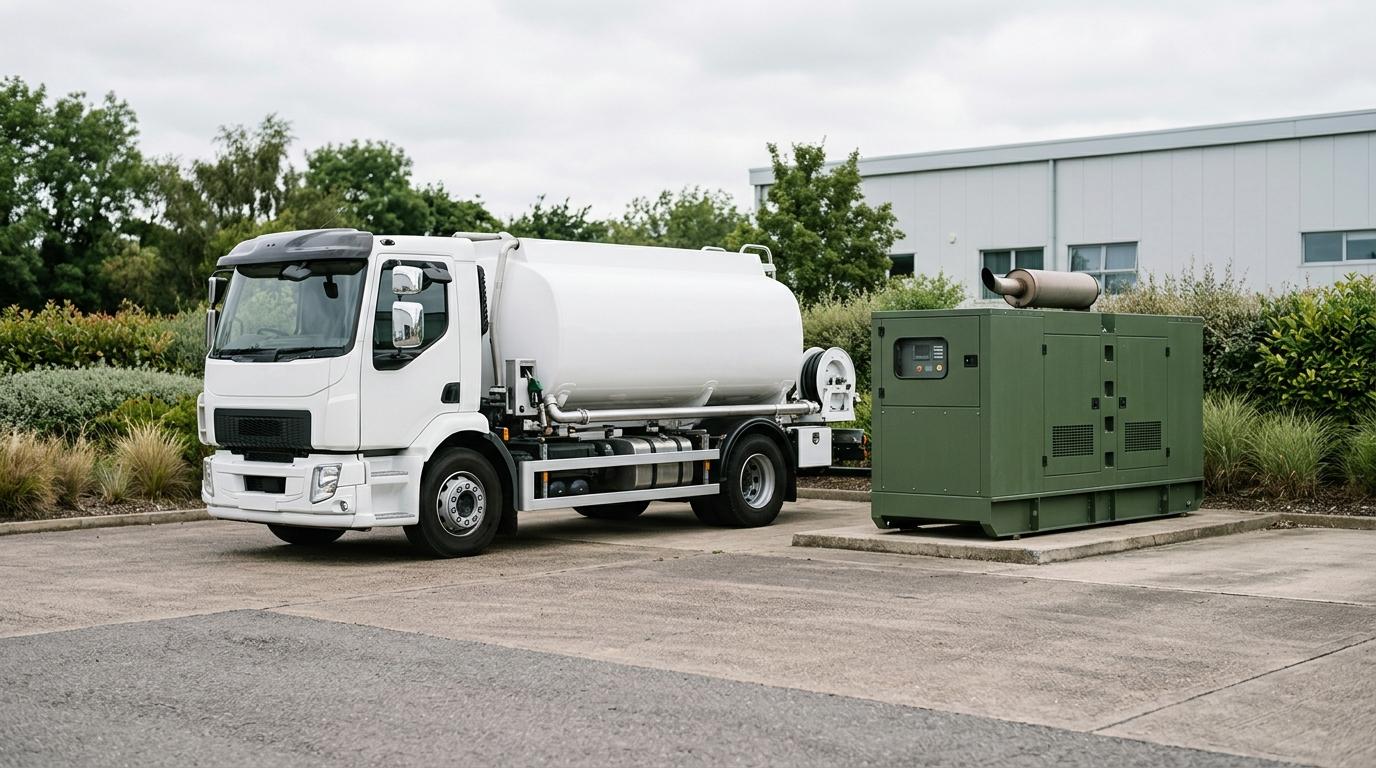
- Confirm whether on site bulk diesel storage is permitted under facility rules or if equipment requires direct refuelling by mobile tankers.
- Check that access roads, turning radii, and overhead clearances accommodate large fuel delivery vehicles without disrupting standard site traffic.
- Establish verification procedures to inspect fuel density, cleanliness, and water presence before decanting diesel into primary storage tanks.
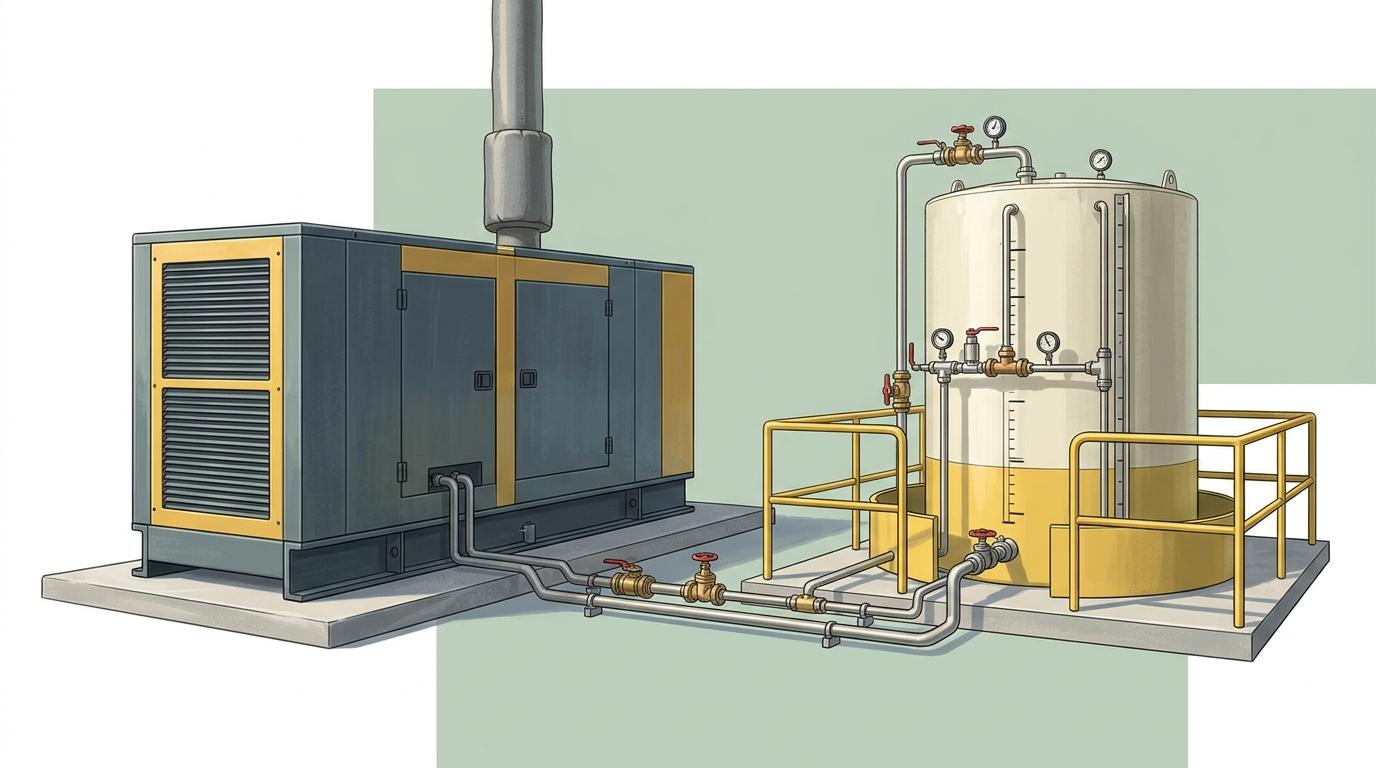
- Confirm the presence of secondary containment, spill response kits, and appropriate fire safety equipment around the generator fuel perimeter.
- Determine monitoring protocols, such as calibrated manual dipsticks, inline flow meters, or remote digital sensors, to track daily consumption accurately.
Frequently Asked Questions About Generator Fuel Budgeting
Does generator fuel consumption increase in direct proportion to electrical load?
Fuel consumption rises as load increases, but the relationship is nonlinear. Diesel engines operate with higher thermal efficiency per kilowatt hour generated within mid load ranges compared to low load states, where baseline mechanical friction consumes fuel without producing proportional power.
Why does running a generator on light load increase relative fuel expense?
Operating a generator below thirty percent of capacity burns fuel inefficiently because the engine consumes a baseline volume of diesel merely to maintain operating speed. Prolonged light loading also risks wet stacking, where unburned fuel accumulates in the exhaust manifold and lowers overall engine performance.
What documentation is recommended to reconcile commercial fuel deliveries?
Commercial facilities should maintain delivery receipts, volume records before and after decanting, running hour logs, and daily tank dip measurements. Comparing actual fuel usage with logged running hours helps identify abnormal burn rates, fuel loss, or mechanical degradation early.
How should project teams account for retail diesel price variations?
Diesel fuel prices fluctuate according to global oil trends and regional distribution factors. For long duration projects, budgets should include floating price assumptions or index linked clauses rather than relying on static purchase estimates, allowing financial models to adapt smoothly to market adjustments.
Is fuel refuelling typically included in basic generator rental agreements?
Basic rental agreements generally cover the generator unit and scheduled routine maintenance, leaving fuel sourcing as a facility responsibility. Some providers offer turnkey fuel management as an additional service, so teams must clarify delivery responsibilities and billing mechanisms prior to contract signing.
When should a commercial site consider on site bulk fuel storage tanks?
Dedicated on site bulk storage is advantageous for operations running continuous shifts or for locations with restricted delivery hours. Receiving bulk deliveries in larger volumes can reduce transport surcharges and safeguard against power interruptions caused by delayed replenishment.
Plan your commercial generator fuel supply and establish predictable operational refuelling with BorrowBox. Explore commercial fuel supply and management solutions