Maintenance
Generator AMC Guide: Coverage and Service Choices
Learn what a generator AMC covers, compare contract types against pay per repair options, and understand key checklist items for commercial sites.
By BorrowBox ·
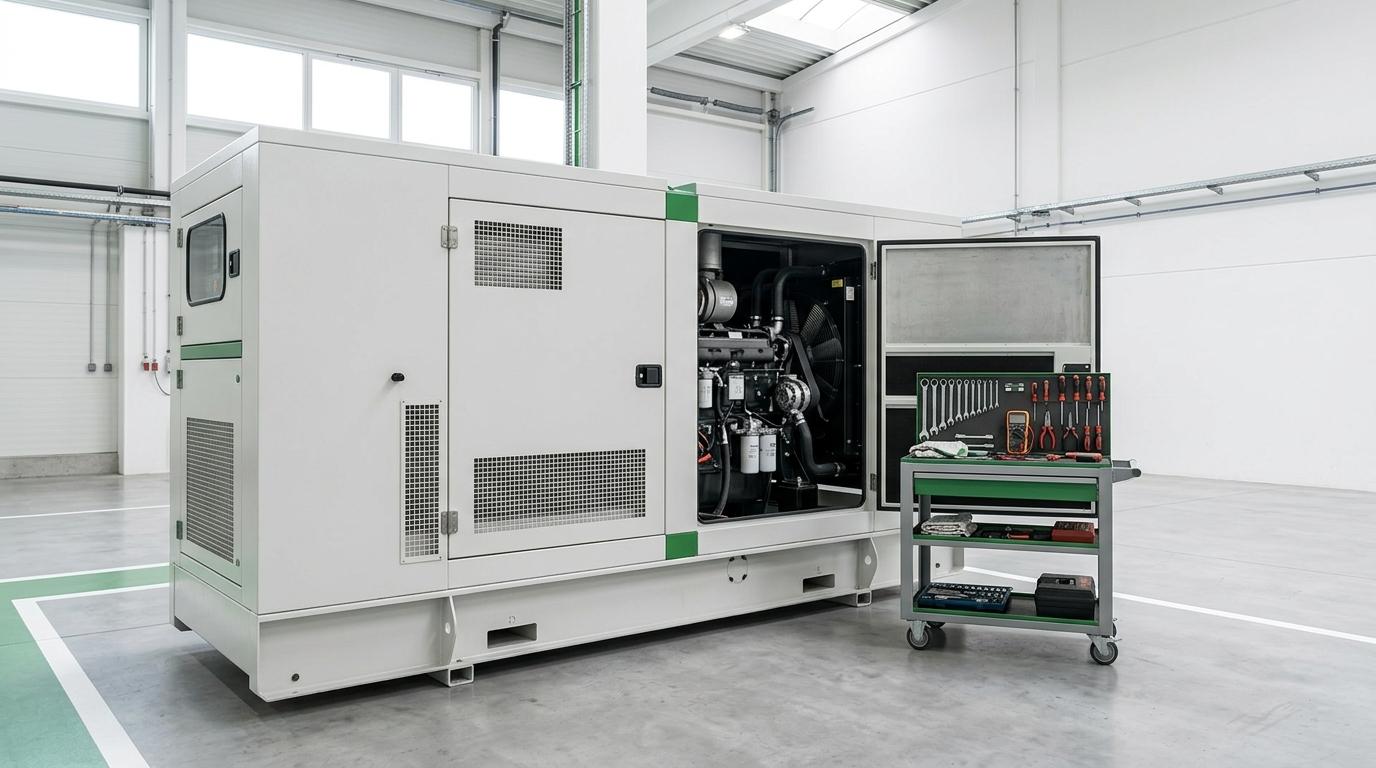
A generator AMC, or annual maintenance contract, is a structured service agreement between an equipment owner or renter and a specialised maintenance provider to manage routine servicing, engine inspections, and emergency repairs over twelve months. Investing in an agreement protects backup power reliability by establishing fixed schedules for technician visits, identifying minor mechanical issues before they trigger outages, and clarifying labour commitments in advance. Deciding whether an agreement makes financial sense depends heavily on run hours, operational criticality, and internal technical capability.
Core Inclusions in a Generator Maintenance Agreement
Maintenance agreements vary significantly across service providers, yet standard packages typically address fundamental operational requirements across electrical, mechanical, and cooling systems. Routine service visits form the foundation of these contracts, typically taking place quarterly or monthly based on generator duty cycles.
- Scheduled physical inspection of engine mountings, belts, hoses, and exhaust piping
- Lubrication system reviews including oil level checks, leak detection, and pressure monitoring
- Cooling system evaluations covering coolant levels, radiator cleanliness, and fan belt tension
- Fuel delivery inspection involving water separator drainage, fuel line reviews, and leakage checks
- Electrical assessments covering alternator output, wiring harness tightness, and control panel diagnostics
- Starter battery health checks including terminal cleaning, voltage readings, and specific gravity verification
Basic agreements generally cover the labour and diagnostic fees for these scheduled visits. However, site managers must verify how providers treat routine replacement materials such as lube oil, coolant top ups, air filters, and fuel cartridges, as these items may be billed separately unless explicitly stated.
Comparing Comprehensive and Non Comprehensive Contracts
Facilities generally choose between two primary contract structures when arranging maintenance: comprehensive and non comprehensive agreements. The distinction dictates which party absorbs financial risk when an unexpected mechanical failure occurs.
| Contract Model | Routine Labour | Consumables and Filters | Replacement Spares | Breakdown Labour | Budget Predictability |
|---|---|---|---|---|---|
| Comprehensive AMC | Included in base contract fee | Typically bundled into agreed rate | Included subject to contract limits | Included with priority scheduling | High stability with fixed annual cost |
| Non Comprehensive AMC | Included for planned visits | Billed separately per replacement | Billed as separate purchases | May incur supplementary labour fees | Moderate stability with variable repair bills |
| Pay Per Repair | Billed per callout and service hour | Billed at spot market prices | Billed on demand at retail rates | Billed per incident at standard rates | Low predictability with erratic expenses |
Comprehensive arrangements provide the highest financial predictability because replacement components like electronic relays, solenoids, or water pumps are absorbed by the provider under defined terms. Conversely, non comprehensive contracts carry lower upfront subscription rates but expose the business to variable parts invoices throughout the year.
When to Choose an AMC Versus Pay Per Repair
Some businesses weigh whether a continuous contract is necessary, especially if their backup generator runs only a few hours every quarter during rare utility outages. While opting for on demand callouts avoids an ongoing service retainer, it introduces distinct operational vulnerabilities.
Pay per repair models work best when equipment is non mission critical, where an unexpected delay of several days during a blackout does not halt revenue or compromise human safety. Under this framework, you contact an independent technician only when the unit faults or requires an overdue oil flush. The trade off involves variable response times and potential difficulty sourcing experienced technicians during regional grid failures when demand peaks.
An annual maintenance agreement becomes preferable when power interruptions carry tangible financial or reputational consequences. Facilities such as data rooms, production lines, cold storage warehouses, and medical clinics cannot tolerate unmonitored assets that might fail to start during an emergency. The predictability of routine technician oversight reduces risk and extends engine longevity.
Evaluating Provider Terms Before Signing
Carefully scrutinising contract language prevents surprise expenses and unaligned expectations during emergencies. Every provider structures service level commitments differently, meaning your commercial team must clarify specific operational boundaries before signature.
- Target breakdown response timelines for both business hours and overnight weekends
- Definition of consumable parts versus durable spare components within the scope of work
- Procedures for major overhauls, engine decarb tasks, or alternator rewinding
- Coverage of remote monitoring equipment or automated transfer switch maintenance
- Exclusions related to fuel contamination, rodent damage, or site environmental issues
Frequently Asked Questions
What is the primary benefit of securing an annual maintenance contract?
The main advantage is continuous operational readiness. Scheduled checkups identify developing component wear early, which reduces the chance of unexpected engine failure during power grid blackouts.
Does an agreement include major engine overhauls?
Major overhauls and complete engine rebuilds are almost universally excluded from basic and standard comprehensive agreements. These heavy engineering interventions require dedicated quotations based on total running hours.
How many service visits occur in a typical annual schedule?
Most standard commercial agreements provide four quarterly maintenance visits per year. Installations subject to heavy continuous running or dusty operating environments often upgrade to monthly visit schedules.
Is pay per repair more economical for standby emergency units?
Pay per repair may show lower baseline accounting expenditures if no failures arise. However, deferred upkeep frequently results in dead batteries or blocked fuel injectors, leading to costly failure when backup power is urgently needed.
What consumables are usually excluded from basic contract tiers?
Standard non comprehensive agreements typically exclude lubricating engine oil, radiator coolant, primary and secondary fuel filters, air filter elements, and starter batteries from the baseline contract price.
Can rental generators be placed on an annual maintenance contract?
Rental packages from professional equipment providers often integrate routine servicing directly into the monthly hire agreement. When hiring long term, check whether maintenance responsibilities lie with the rental provider or your site crew.
Review our tailored generator care options to keep your backup power equipment running reliably. Explore commercial generator maintenance services