Maintenance
Generator Maintenance Guide for Commercial Sites
A comprehensive generator maintenance guide covering fluids, battery testing, cooling checks, and routine schedules for commercial facilities in India.
By BorrowBox ·
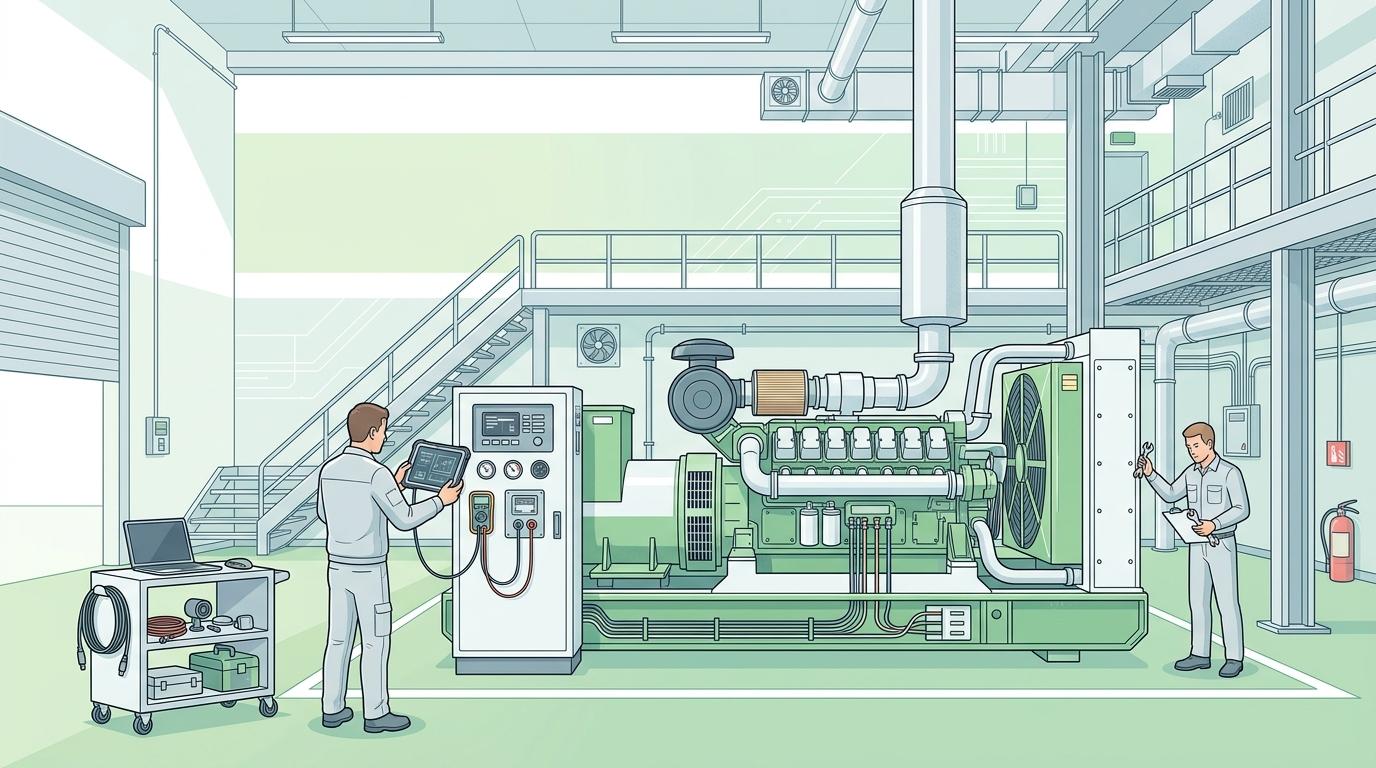
Generator maintenance protects commercial facilities against sudden blackout disruptions, equipment damage, and high emergency repair bills. A structured maintenance program combines daily visual observations, weekly test runs, scheduled lubricant changes, and periodic load tests. By treating backup power as an active mechanical asset rather than idle insurance, operations managers reduce the risk of start failure during unexpected grid disruptions.
Core Pillars of Facility Generator Care
Commercial diesel units rely on mechanical, chemical, and electrical subsystems operating in harmony. When any one subsystem suffers from neglect, the entire engine may fail to crank or shut down abruptly under building load. Facility teams that build reliable operations focus their preventive discipline on four major pillars.
- Lube oil and filtration management to protect internal moving parts from friction and carbon accumulation
- Cooling system integrity to manage engine temperatures during peak ambient heat and continuous runs
- Starting battery verification to provide immediate cranking amps when an automatic transfer switch triggers
- Fuel quality monitoring to prevent microbial growth, particulate contamination, and fuel line blockages
Routine Generator Maintenance Checklist
Maintenance tasks should follow defined operating hour thresholds and calendar intervals. Even if a generator runs rarely, ambient temperature fluctuations, dust ingress, and moisture condensation degrade fluids and electrical contacts. The table below outlines routine inspection priorities for industrial and commercial power assets.
| Interval | Focus Area | Primary Service Activities | Operational Outcome |
|---|---|---|---|
| Daily or Weekly | General visual and fluid levels | Check oil dipstick, coolant expansion tank, fuel level, and leak indicators | Catches slow leaks and low fluid states before startup cycles begin |
| Monthly | Starting system and physical belts | Inspect battery terminals, measure float charge, and inspect alternator drive belts | Reduces starter motor failure risks when grid power drops unexpectedly |
| Six Months | Filtration and fuel delivery | Clean or replace primary fuel filters, inspect air filters, and drain fuel water separators | Prevents injector clogging and rough running under building load |
| Annual | Complete servicing and load testing | Change lube oil, renew all filters, flush coolant if specified, and conduct load bank test | Clears unburned carbon and confirms alternator capacity across operational loads |
Inspecting Critical Generator Subsystems
Effective maintenance requires looking beyond surface cleanliness. Technicians must understand how ambient dust, vibration, and thermal cycles affect critical components on Indian commercial sites.
Engine oil loses viscosity and collects soot as operating hours accumulate. Standby engines that experience frequent cold starts and short exercise runs without reaching optimal operating temperature can suffer from fuel dilution in the oil sump. Checking oil level and aroma helps detect internal seal leaks. Technicians should always follow manufacturer guidelines regarding oil grades and replacement schedules rather than guessing based on visual appearance alone.
Radiators in urban and industrial zones collect atmospheric dust, pollen, and debris, which restricts airflow. Low coolant levels or weakened anti freeze and corrosion inhibitor mixtures can result in cylinder cavitation or sudden overheating trips. Routine maintenance must include inspecting radiator fins, checking hose flexibility, and verifying jacket water heaters so the engine stays warm for immediate emergency starts.
A flat or corroded battery remains the single most common reason a standby generator fails to start during a power outage. Lead acid batteries lose electrolyte volume over time through evaporation. Terminals gather lead sulfate deposits that resist charging currents. Maintenance routines must include terminal cleaning, electrolyte level checks on flooded batteries, and specific conductance or load testing to confirm battery capacity.
Preventing Common Operational Failures
Standby diesel generators that run with light loads under thirty percent of their rated capacity often experience wet stacking. Wet stacking occurs when unburned fuel, condensed moisture, and engine carbon accumulate in the exhaust piping and turbocharger housing. Over time, this buildup degrades power delivery, increases exhaust emissions, and creates potential fire risks.
Routine maintenance addresses wet stacking by introducing controlled resistive load bank testing. Running the engine at high capacity burns off accumulated carbon deposits and seats the piston rings properly. In addition, facility teams should ask their fuel suppliers about fuel polish schedules if bulk diesel remains in storage tanks for more than six months, because degraded fuel damages common rail injectors and stalls engines under sudden loads.
Generator Maintenance Frequently Asked Questions
How often should a commercial diesel generator undergo routine servicing?
Most manufacturers recommend minor inspections weekly or monthly, with major fluid and filter changes occurring every two hundred to two hundred fifty operating hours, or at least once every calendar year. The ideal frequency depends on ambient dust levels, site temperature, and total annual run time.
What causes starter battery failure in standby generators?
Starter batteries fail primarily from continuous trickle overcharging, sulfation of internal plates, loose terminal connections, and ambient heat evaporation. Regular battery conductance testing and maintaining proper terminal tightness minimize these sudden cranking failures.
Why is wet stacking a concern for diesel generators?
Wet stacking happens when an engine operates well below its designed thermal range, leaving unburned fuel to collect in the exhaust system. This condition reduces operating efficiency, accelerates engine wear, and can be corrected by conducting regular load bank runs.
How does stored diesel fuel degrade over time?
Diesel fuel absorbs moisture from condensation inside storage tanks, encouraging bacterial and fungal growth at the water fuel boundary. This sludge clogs fuel filters, corrodes fuel lines, and can choke injectors during critical emergency starts.
What should facility managers confirm in a maintenance contract?
Managers should confirm emergency response windows, whether filter and oil costs are included, technician availability on holidays, protocol for oil analysis, and whether load bank equipment is provided during annual evaluations.
Can load bank testing replace normal building load testing?
Load bank testing supplements but does not replace testing with actual facility loads. A load bank provides a controlled, precise electrical demand up to maximum rating without risking building equipment, allowing technicians to verify alternator and cooling capabilities.
Facility managers seeking dependable generator servicing, scheduled visits, and preventive support can connect with BorrowBox experts to review service agreements. Explore Generator Maintenance Contracts with BorrowBox