Monitoring
Generator Monitoring System Guide for Business
Learn what a generator monitoring system tracks, how telemetry hardware connects to cloud dashboards, and key metrics for commercial sites.
By BorrowBox ·
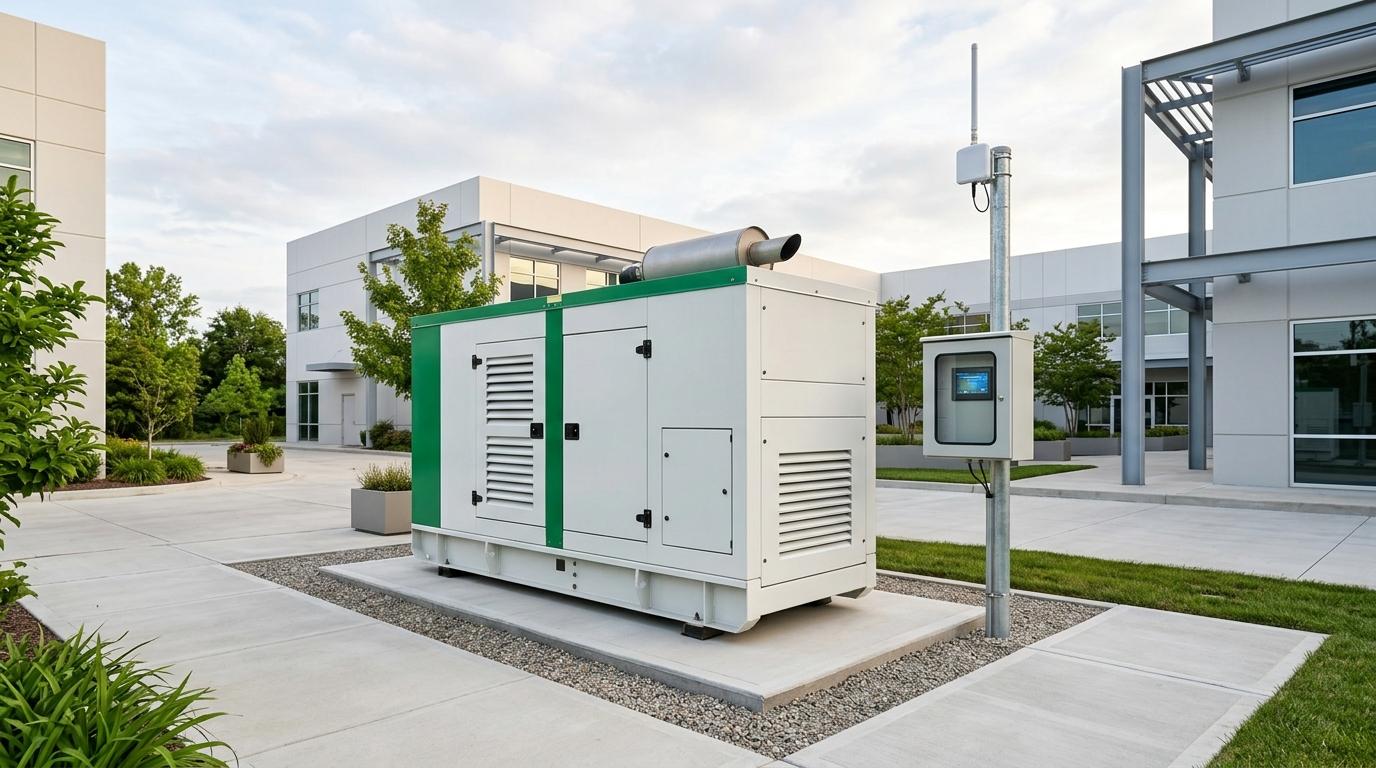
A generator monitoring system tracks the performance, fuel reserves, and electrical parameters of industrial power equipment through telemetry hardware and cloud dashboards. Commercial facilities in India use these systems across factories, logistics hubs, data centers, and corporate buildings to supervise backup power without relying on manual meter readings. By streaming operational data such as engine temperature, battery voltage, and diesel volume to a remote portal, teams can spot developing mechanical problems, plan maintenance visits, and verify that standby generators remain ready to accept facility loads during utility power cuts.
Hardware Layers in Industrial Generator Telemetry
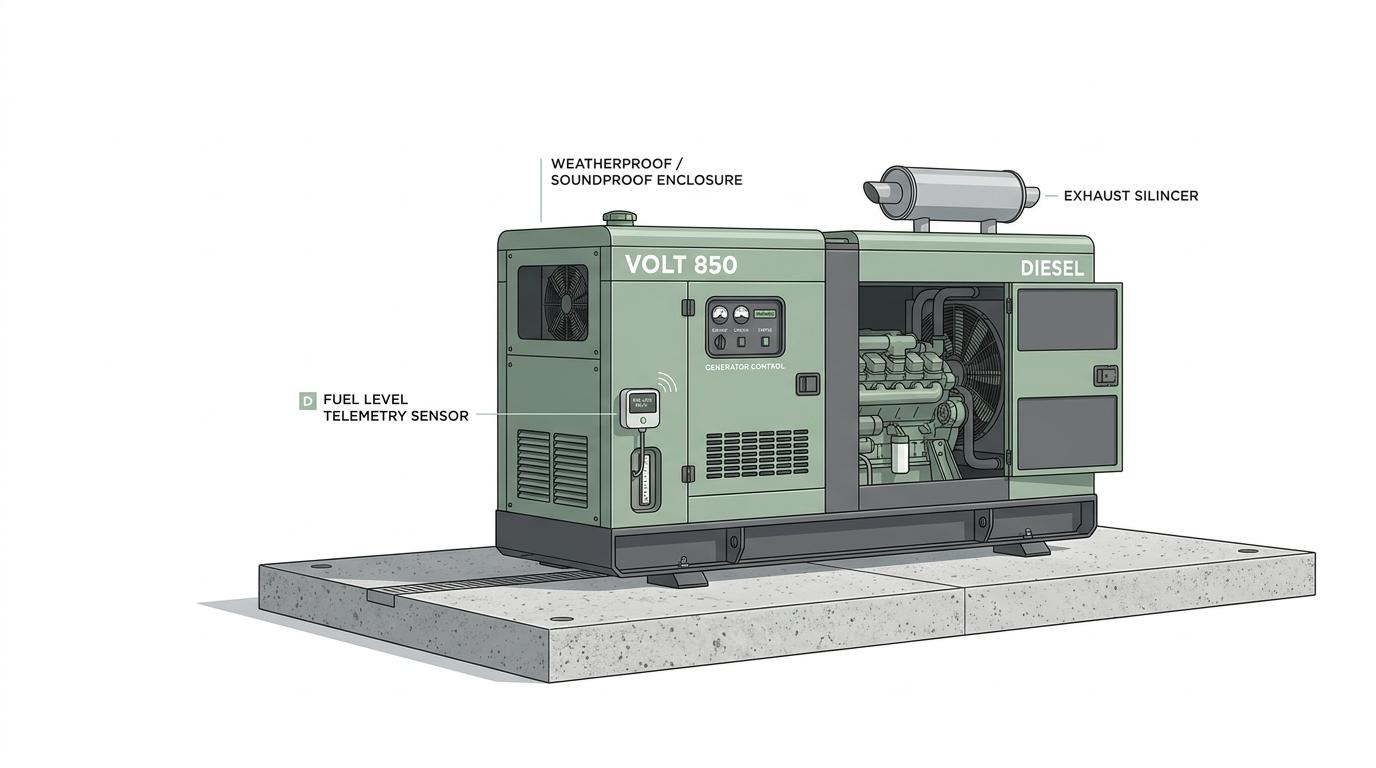
Telemetry hardware bridges the gap between raw generator mechanics and internet connected software. A typical industrial installation relies on three hardware layers:
- Digital communication gateways that interface with engine controllers
- Analog and digital auxiliary sensors that monitor tanks, batteries, and ambient temperatures
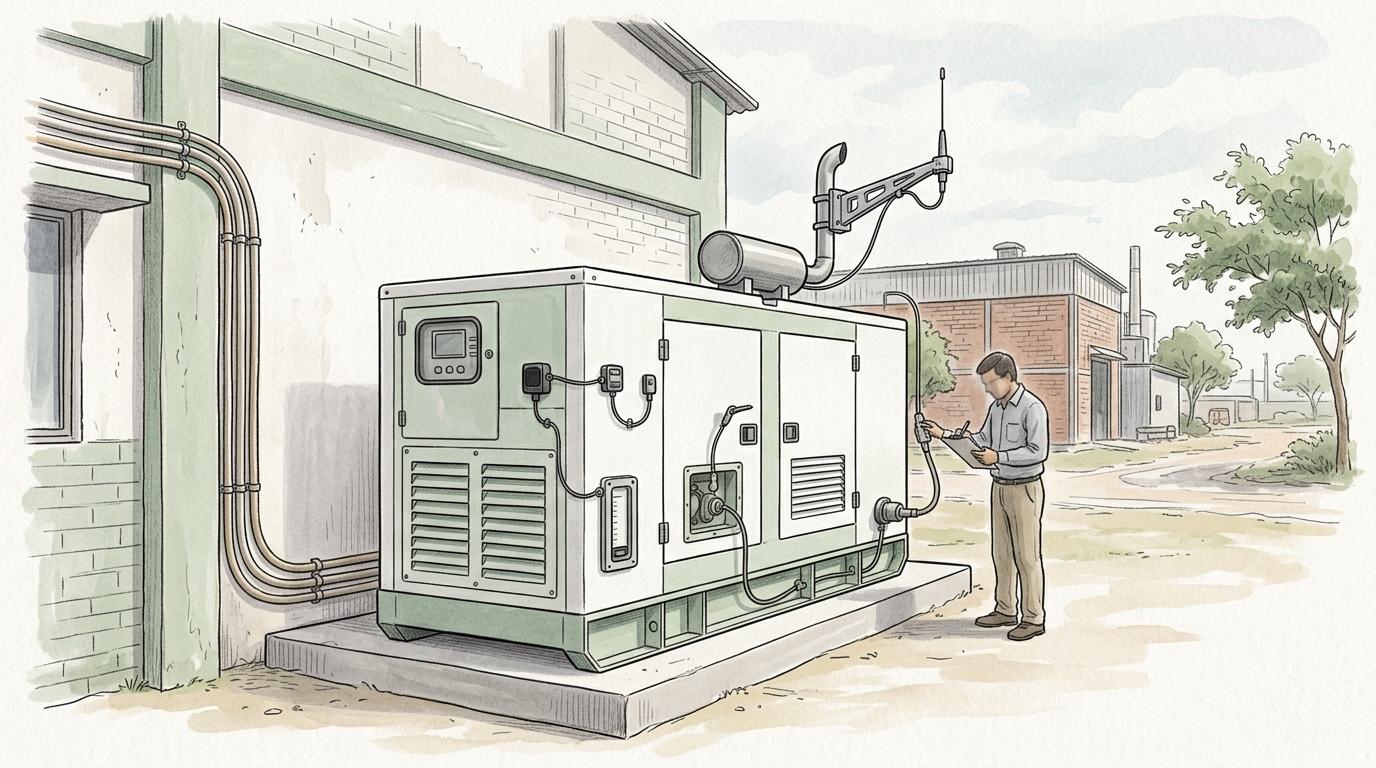
- External communication antennas positioned to capture cellular or local wireless signals
Digital engine controllers communicate through serial communication channels such as Modbus RTU or CANbus J1939. The telemetry gateway reads register values directly from the controller, pulling engine speed, lubricating oil pressure, coolant temperature, operating hours, and active diagnostic trouble codes. This direct connection captures diagnostic details without disturbing the primary control wiring.
Facilities running older generators or units lacking digital control interfaces rely on auxiliary external sensors. Current transformers clamped onto output conductors measure electrical load across each phase. External temperature transmitters track exhaust and radiator thermal profiles, while hydrostatic or ultrasonic level probes measure diesel inside the base storage tank. These external probes wire into analog gateway channels, enabling mixed vintage equipment fleets to report standard operating information onto a single management screen.
Network Connectivity Options for Commercial Facilities
Transmitting sensor readings from an acoustic generator enclosure to the cloud requires an appropriate communication pathway. Site architecture influences connectivity, especially when units reside in basement substations or congested industrial estates.
Cellular modems operating on modern mobile networks remain a frequent solution for standalone equipment. A cellular link functions outside local enterprise networks, which helps avoid routing telemetry packets through internal corporate firewalls. When acoustic enclosures or underground concrete walls dampen mobile signals, field technicians can run low loss coaxial cabling to place high gain external antennas outside the structure.
Hardwired local network connections offer an alternative route when cellular signals cannot reach deep basement vaults. Ethernet cabling connects the telemetry gateway directly to facility network switches. This path requires coordination with corporate network teams to assign local network addresses and verify port access. Some industrial installations implement dual communication hardware, utilizing wired building connections as the primary data path while keeping cellular links as an auxiliary backup.
Essential Operational Metrics Tracked by Remote Systems
A practical generator monitoring system arranges mechanical, electrical, and fuel data into clear categories so operators can understand equipment conditions instantly.
| Parameter Group | Key Metrics Monitored | Operational Value for Site Teams |
|---|---|---|
| Electrical Output | Line voltage, electrical frequency, true power in kilowatts, power factor, current per phase | Reveals phase imbalances and unstable voltage before fluctuating power can harm sensitive building machinery |
| Engine Health | Coolant temperature, oil pressure, starter battery voltage under load, engine speed | Detects failing radiator circulation, mechanical friction, and weak starting batteries that could prevent successful starts |
| Fuel Inventory | Current tank volume, run time fuel consumption rate, refill volume, unexpected volume drops | Supports timely diesel deliveries and flags sudden volume reductions that suggest leaking fittings or unauthorized fuel removal |
| Operating Mode | Controller selector switch status, emergency stop position, common warning status | Confirms that the control panel is set to automatic start mode rather than left in manual or stopped status |
Setting Up Actionable Threshold Alerts and Dashboards
Raw sensor streams become useful when monitoring platforms turn measurements into practical notifications and accessible visual screens. Establishing structured alert thresholds helps maintenance staff identify anomalies before power failures create downtime.
Tiered notification logic prevents alert fatigue across operations teams. A low fuel reading can trigger an informational email update when reserves drop below thirty percent during standby periods. If the generator is actively running during a grid outage and diesel falls below twenty percent, the platform can escalate alerts via direct text message or voice calls to on duty facility engineers. Similar tiered warnings can trigger when battery charging voltages drop below normal resting values, signaling that the battery charger requires inspection.
Centralized web dashboards allow regional supervisors to review distributed power assets across several cities from one browser window. Engineering managers can track total running hours, monitor fuel burn rates against generated power, and review historical fault logs to verify whether equipment receives timely scheduled maintenance.
How to Evaluate Telemetry Platforms for Site Operations
Selecting the right monitoring setup requires matching site limitations with software capabilities. Operations teams should confirm whether gateway hardware supports the specific controller models installed across their facility fleet, particularly when managing equipment from varied engine manufacturers. Ask whether universal inputs can accommodate older analog machinery if legacy units share the site.
Review data transmission intervals and storage provisions. Providers structure telemetry data reporting differently, with some sending frequent updates during active runs and extending transmission gaps during quiet standby periods. Inquire about data retention periods, export formats, browser accessibility across mobile devices, and user access levels so site operators, mechanical contractors, and regional executives see appropriate views.
Frequently Asked Questions About Generator Monitoring
Can a generator monitoring system work with older generator models?
Yes. Older units without digital control cards can use external analog and digital sensors. Current transformers, temperature probes, hydrostatic pressure transmitters, and magnetic pickups connect directly to auxiliary gateway ports to collect fundamental operational data.
How does telemetry hardware maintain signal in basement generator rooms?
Basement installations generally utilize external high gain antennas run through cable risers to exterior walls, hardwired local area network cables connected to facility switches, or local wireless repeaters linked to building network routers.
Which controller protocols do remote monitoring units use?
Most modern digital engine controllers communicate through Modbus RTU using serial RS485 connections, Modbus TCP over local Ethernet networks, or CANbus J1939 communication channels to send registers to telemetry gateways.
How does remote telemetry track diesel fuel consumption?
Hydrostatic pressure probes or ultrasonic depth sensors continuously measure diesel volume. When the engine operates, the cloud platform calculates consumption rates over time and contrasts fuel reduction against expected burn rates for the reported electrical load.
Can adding a monitoring gateway interfere with engine control units?
Standard industrial telemetry gateways read data registers in passive mode through isolated communication ports. They collect telemetry without modifying control logic, speed governing parameters, or protective safety shutdown setpoints.
What happens to operational data during a cellular network outage?
Industrial gateways contain internal non volatile memory that logs sensor readings locally if network connectivity drops. When the connection resumes, the gateway automatically transmits stored data logs to the cloud platform without losing historical records.
Review connected telemetry and remote asset monitoring solutions for your commercial backup power systems. Explore IoT generator monitoring solutions