Rent
Generator Rental Load Sizing Guide for Commercial Sites
Learn how to calculate connected load starting surge and capacity for generator rental projects across commercial facilities.
By BorrowBox ·
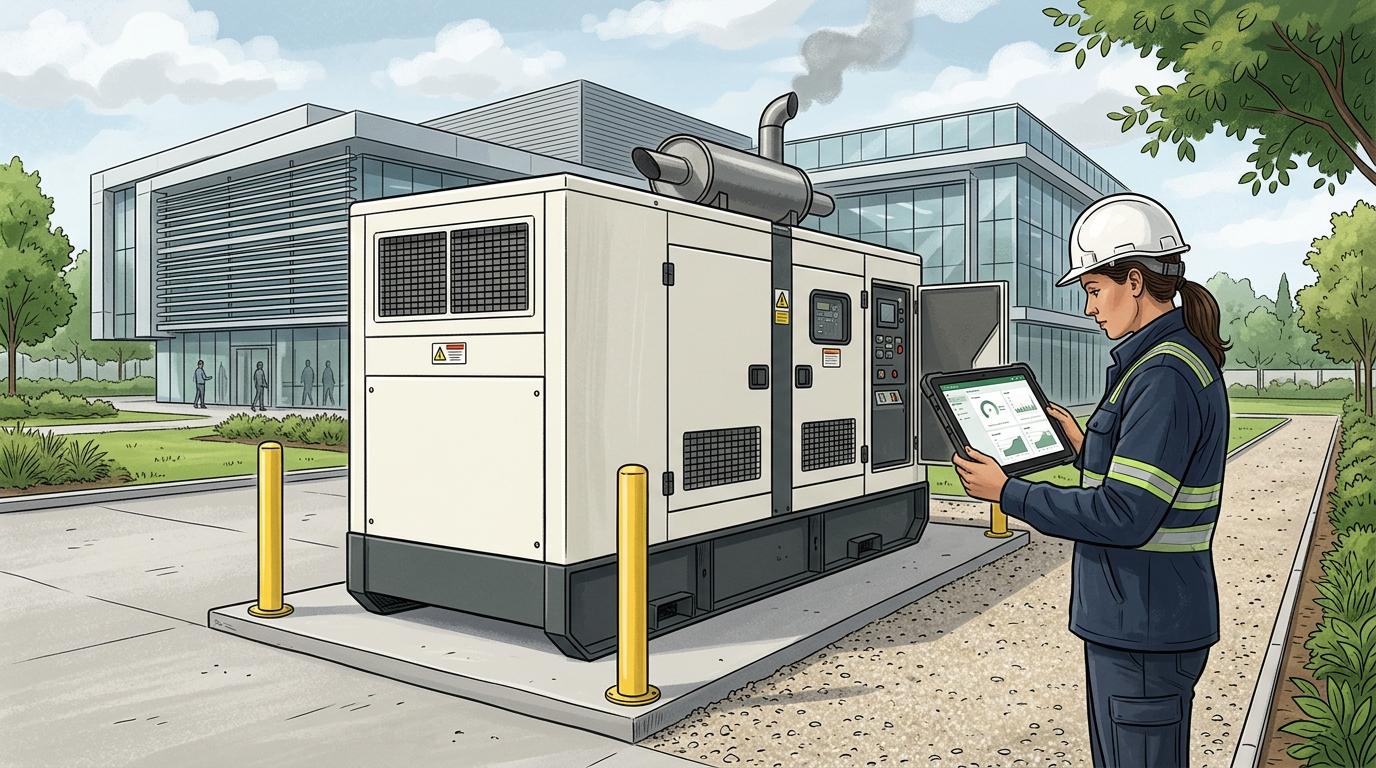
Planning a generator rental requires calculating your total connected power, accounting for electric motor startup surges, and applying a practical diversity factor to match your site demand. Sizing errors lead to operational interruptions from circuit trips or excessive fuel spending from running an oversized diesel engine under light load. A structured calculation gives facility managers clarity on exact kilowatt and kilovolt ampere requirements before signing an equipment contract.
Step One Calculate Total Connected Load
Connected load represents the sum of all electrical equipment nameplate ratings that might operate on auxiliary power. Facility teams must catalog continuous loads such as facility lighting, data networks, climate control, ventilation fans, and industrial machinery. Check the manufacturer nameplates on critical panels to record values in kilowatts or continuous running amperes.
Generators supply apparent power measured in kilovolt amperes, while site machinery consumes active power measured in kilowatts. The ratio between active power and apparent power is the power factor, typically rated at 0.8 for conventional commercial installations. Dividing your total required kilowatts by 0.8 yields the baseline kilovolt ampere capacity your power source must support under full operational demand.
- List all essential circuits and record active power in kilowatts directly from panel distribution schedules
- Convert single phase and three phase line currents to uniform power units using actual operating voltages
- Sum all base lighting and server loads that remain energized continuously throughout daily site shifts
- Identify seasonal machinery or backup cooling towers that alter baseline electrical demand during summer months
Step Two Account for Motor Starting Loads
Induction motors found in chillers, air compressors, industrial pumps, and elevators draw substantial inrush current when starting from a standstill. This transient surge can reach three to six times the motor running current for several seconds. If a power unit cannot absorb this instantaneous voltage drop, safety breakers trip or sensitive electronic devices experience automatic shutdown.
Facility engineers calculate the single largest motor starting surge on the circuit rather than assuming all motors start at the exact same second. Soft starters and variable frequency drives moderate starting currents, whereas direct on line starters require generous surge headroom. Staggering motor starts through programmed building automation systems helps moderate peak starting demand and reduces the required frame size of the alternator.
Step Three Apply a Realistic Diversity Factor
Industrial and commercial facilities rarely run every single electrical appliance and motor simultaneously at peak capacity. A diversity factor reflects the probability that varied site loads operate concurrently during working hours. Applying a diversity factor prevents overestimating your capacity needs while keeping your diesel power asset operating within its sweet spot of 60 to 80 percent continuous load.
Calculating diversity requires reviewing operational duty cycles across departments. Kitchen equipment, workshop tools, and intermittent batch processing machinery operate on distinct schedules. Multiplying total connected non continuous load by an appropriate diversity percentage provides a realistic operational target, protecting the engine against wet stacking caused by prolonged low load running.
Comparison of Generator Sizing Approaches
| Sizing Strategy | Operational Impact | Fuel Efficiency | Equipment Risk |
|---|---|---|---|
| Undersized Capacity | Frequent breaker trips and voltage drops during motor starts | High strain with hot running temperatures | Severe risk of alternator winding failure and operational downtime |
| Oversized Capacity | Excessive physical footprint and unnecessary rental spend | Poor combustion efficiency and unburned fuel buildup | Exhaust cylinder slobbering and carbon accumulation over time |
| Engineered Sizing | Stable site voltage with seamless motor startup transitions | Optimal specific fuel consumption per generated kilowatt hour | Extended asset service intervals and predictable operational stability |
Practical Sizing Calculation Walkthrough
Consider a manufacturing warehouse with 80 kilowatts of constant lighting and computer equipment alongside two 30 kilowatt three phase exhaust blowers. The total connected running power equals 140 kilowatts. With a standard 0.8 power factor, this running load translates to 175 kilovolt amperes of continuous demand.
Next, account for startup behavior. If the blowers use soft starters that draw 2.5 times running current, starting one blower while the other machinery runs adds an additional surge load. Factoring in a staggered starting sequence avoids stacking these surge currents. Selecting a 250 kilovolt ampere unit provides ample headroom for motor inrush while maintaining steady state operation above 60 percent load capacity.
Frequently Asked Questions About Generator Sizing
What is the difference between KW and KVA?
Kilowatts measure actual working electrical energy consumed by machinery, whereas kilovolt amperes measure total apparent power delivered by the generator alternator. In typical three phase industrial systems with a 0.8 power factor, dividing kilowatts by 0.8 gives the required kilovolt ampere rating.
Why is running a generator on low load harmful?
Operating an engine below 30 percent rated capacity prevents combustion chambers from reaching full operating temperature. This causes incomplete diesel combustion, soot accumulation in exhaust manifolds, and wet stacking, which degrades engine oil and damages internal cylinder liners.
How do soft starters impact required generator capacity?
Soft starters limit the sudden voltage dip and reduce peak starting current from six times running current down to around two to three times running current. This allows sites with large electric pumps or fans to specify a smaller power rating without tripping breakers during startup.
How do ambient temperatures affect generator output in India?
High summer temperatures and elevated site altitudes reduce air density, resulting in engine derating. Most commercial diesel engines lose output capacity when ambient temperatures exceed 40 degrees Celsius, requiring an extra thermal buffer during peak summer months.
What documentation should I review before finalizing capacity?
Review single line electrical schematics, utility billing data showing past maximum demand indicators, and equipment nameplate schedules. This documentation clarifies real historical peak loads rather than theoretical maximum estimates.
Can I use multiple smaller generators instead of one large unit?
Paralleling multiple units provides flexible scaling during shifting shift patterns, allowing surplus generators to shut down during low demand hours. This approach requires synchronized control panels and adequate physical yard space to position multiple enclosures.
Review your site electrical profile with power specialists to identify the ideal unit rating before finalizing your generator rental agreement. Request Sizing Quote