Rent
Temporary Power Rental Guide for Business Sites
Discover why temporary power rental involves distribution cables, fuel planning, remote telemetry, and site servicing across Indian business facilities.
By BorrowBox ·
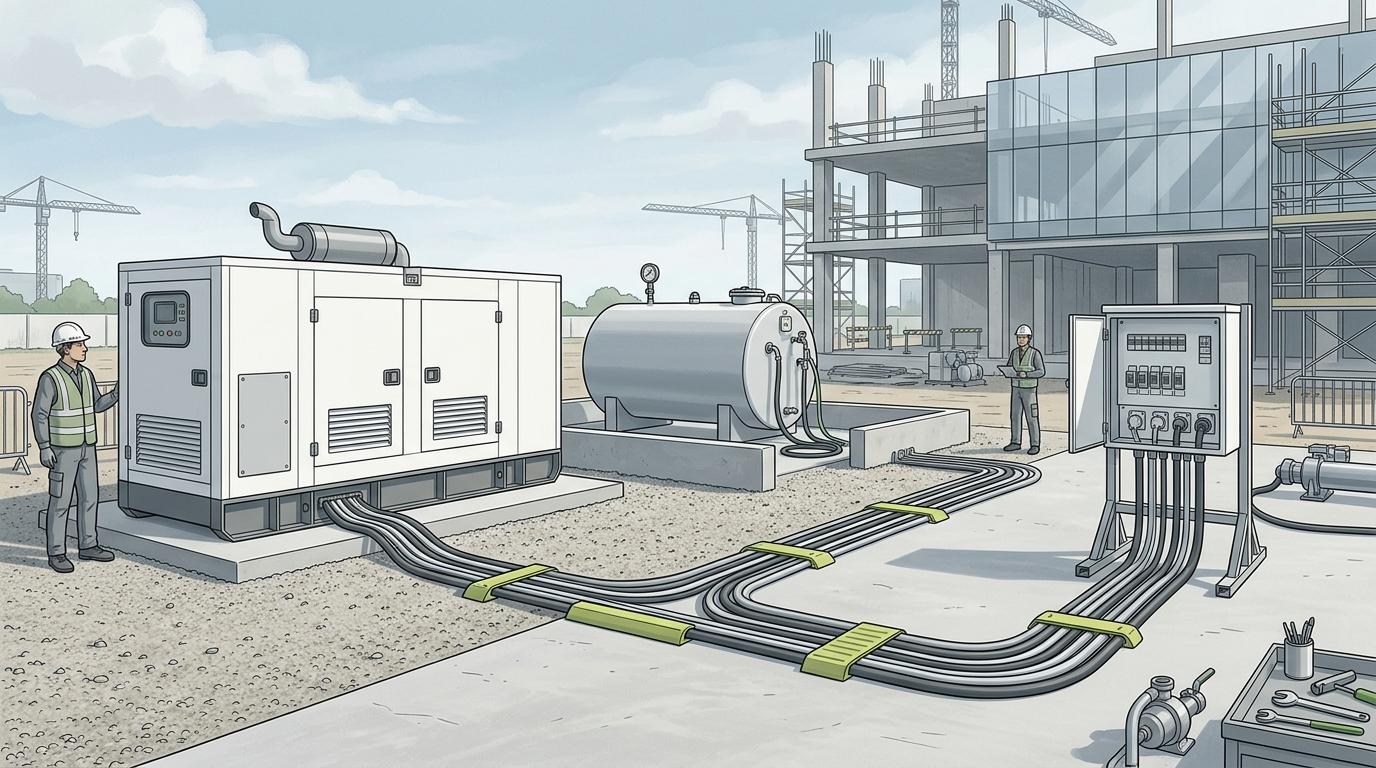
A temporary power rental provides critical electrical supply to facilities experiencing grid delays, planned utility shutdowns, or seasonal manufacturing peaks. Instead of renting a standalone generator, an effective temporary electrification project combines the engine with primary distribution panels, load cables, scheduled diesel delivery, remote condition tracking, and routine technical servicing. Evaluating the entire electrical setup before signing an agreement helps Indian businesses avoid unexpected shutdowns and idle equipment expenses.
When companies source only a bare machine, project teams often encounter unexpected logistical gaps. Missing distribution switchgear, mismatched cable lugs, unverified fuel supplies, and absent technician support can postpone operations. Treating site power as an interconnected service package helps bridge these operational disconnects and aligns equipment capacity with actual field conditions.
Five Pillars of a Complete Temporary Power Installation
Every commercial or industrial facility presents distinct operational parameters. A well planned deployment coordinates five distinct technical areas so your internal workforce does not carry the burden of managing electrical logistics:
- Primary Generation Machinery: Equipment sized to handle base electrical loads, high inrush motor startup currents, and intermittent peak demand without overloading.
- Distribution Hardware: Protective switchboards, feeder panels, changeover switches, and cables sized for run distance and voltage drop prevention.
- Fuel Supply Logistics: Fuel storage tanks, fuel quality verification, and scheduled bowser deliveries to help prevent unexpected fuel exhaustion.
- Telemetry and Monitoring: Digital tracking devices recording running hours, fuel levels, fluid temperatures, load factors, and electrical fault notifications.
- Field Engineering and Servicing: Scheduled filter replacements, lubricant top ups, and routine technical inspections to preserve machine health over long operating hours.
Operational Gaps in Standalone Generator Rentals
Hiring an isolated generator without supporting infrastructure transfers logistical complexity onto your internal site managers. Transportation carriers typically drop machinery at an entry gate without routing cables or evaluating ground stability. If cable lengths fall short of the main facility panel or connection terminals fail to fit busbars, substantial rental expenses accumulate while the machine sits idle.
Fuel procurement introduces additional hurdles. Buying bulk diesel directly requires handling separate vendor credit terms, checking for fuel contamination, and scheduling fuel tankers into restricted facilities. If an independent delivery arrives late during night operations or festival weekends, critical equipment stalls regardless of generator condition. Bundling fuel management into your core power agreement minimizes coordination friction across separate vendors.
Operational oversight presents another common failure point. Standalone rentals usually rely on manual logbooks maintained by security guards or basic equipment operators. Without continuous electronic monitoring, emerging technical anomalies such as battery discharge, coolant leaks, or phase imbalance often remain unnoticed until the breaker trips.
Equipment Rental Versus Integrated Power Services
Selecting the right engagement model depends on internal technical capabilities, site management availability, and the expected duration of your project. The table below outlines how operational responsibilities differ across these approaches.
| Operational Scope | Equipment Only Rental | Integrated Power Service |
|---|---|---|
| Distribution Cabling | Procured, laid, and terminated by client site teams | Supplied, matched, and connected by the rental provider |
| Fuel Procurement | Handled independently through local retail or bulk petroleum vendors | Scheduled and monitored as part of the overall power package |
| Telemetry and Logging | Manual meter readings recorded intermittently by site staff | Automated digital telemetry dashboards with live load alerts |
| Routine Maintenance | Arranged on a call out basis, often involving additional billing | Scheduled proactively based on actual machine running hours |
| Operational Accountability | Fragmented across equipment, fuel, and electrical contractors | Managed by a single partner handling total power continuity |
Planning Temporary Power Deployment on Indian Commercial Sites
Regional weather conditions and infrastructure constraints heavily influence temporary power operations across Indian commercial facilities. Intense summer ambient temperatures can derate engine output, monsoon rains risk water ingress around unsealed terminations, and construction dust clogs air filtration systems quickly.
Site managers must inspect delivery routes and crane reach limits before machinery arrives. Ground surfaces must support the total operating weight of loaded generators and fuel reserves. Project teams must also designate clear zones for safety earthing pits, verify exhaust discharge clearances relative to air intakes, and confirm whether local site rules permit auxiliary fuel storage.
Questions to Review Before Finalizing a Rental Agreement
Commercial terms, response capabilities, and service boundaries vary widely across suppliers. Clarifying these critical details beforehand prevents budget revisions and operational disagreements:
- Does the quotation include supply, laying, and termination of load cables at both ends?
- Who holds responsibility for daily equipment startup, shut down routines, and shift log maintenance?
- What fuel delivery lead times apply during regional holidays or peak traffic periods?
- Are consumable items such as oil, air filters, and coolant included in ongoing monthly rental rates?
- What communication protocol governs technical escalations outside standard commercial working hours?
- Who provides civil earthing pits, lightning protection, and local electrical inspection documentation?
Frequently Asked Questions About Temporary Power
What components come included in a temporary power rental agreement?
Scope depends on the agreed contract structure. Basic equipment rentals supply only the engine and alternator unit. Integrated rental solutions can include the generator, matching distribution switchboards, main cables, changeover mechanisms, digital telemetry, and routine maintenance consumables.
How is fuel replenishment managed during extended equipment hire?
Vendors offer varied approaches. Some ask clients to purchase fuel independently, while others bundle fuel management through third party delivery partners who monitor tank levels remotely and schedule refills before levels drop critically low.
Can temporary power setups expand if site demand increases later?
Modular setups allow extra generators to operate in parallel using synchronizing panels. This approach accommodates rising site demands during phased expansions without requiring an immediate swap of existing machinery.
Who is responsible for earthing and electrical safety on location?
Rental agreements define exact boundaries. Usually, the host facility prepares standard earthing pits meeting local rules, while the power provider connects equipment neutral conductors and metallic chassis to those earth terminals.
What happens if rented generation equipment fails during production?
Service contracts specify technical troubleshooting protocols. Depending on the agreed service level and contract terms, providers may dispatch mobile technicians to inspect faults, replace damaged components, or bring replacement units to site.
How does digital telemetry improve generator runtime reliability?
Remote sensors transmit engine temperatures, oil pressures, battery charge levels, and electrical loads to an online portal. This continuous stream helps technicians spot potential mechanical irregularities before they trigger complete power interruptions.
Planning Your Temporary Power Strategy
Moving from basic machine hire to a comprehensive power solution protects productivity, streamlines internal administrative work, and establishes single point accountability for site electricity. By planning distribution infrastructure, fuel deliveries, and ongoing maintenance alongside machine capacity, businesses keep operations running smoothly without costly delays.
Request a customized temporary power quote for your commercial site Request Temporary Power Quote